Summary: The Red River between Lockport and Lake Winnipeg is one of the best channel catfish fisheries in North America, and late summer is its season. The rules are what keep it that way: no channel catfish over 60 cm may be kept anywhere in Manitoba, so every trophy goes back, and barbless hooks are mandatory province wide, so it goes back in good shape. A Manitoba resident annual licence is $28 plus GST. One thing most write-ups get wrong: the Special Conservation Area at the St. Andrews Lock and Dam is closed to all fishing, and to possession of fishing gear, from 1 April to 15 November, which covers this entire season. Here is the fishery, the current rules, and the first of the greenback walleye.
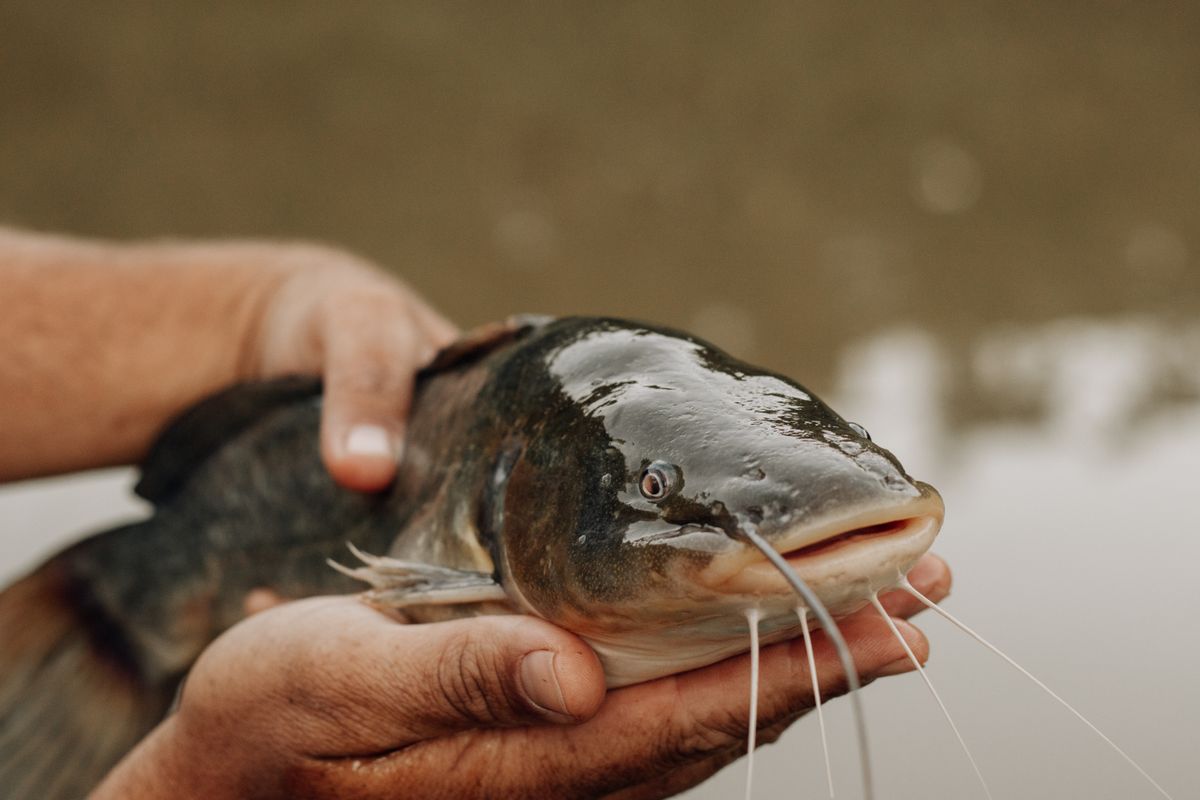
Every channel catfish over 60 centimetres goes back in the river. Every one. That rule is why the fishery is what it is.
Backroad Maps has charted this province for more than 30 years, and the Red is the strangest world-class water we map: a slow, muddy prairie river twenty minutes from downtown Winnipeg that out-fishes destinations people fly to. The City of Selkirk calls itself the Catfish Capital of North America, and the 36-foot statue on Main Street, Chuck the Channel Cat, has been backing up the claim since it was unveiled on 23 May 1986. This is not a wilderness trip. It is a boat launch, a lawn chair, a heavy rod, and a real chance at the biggest freshwater fish most Canadian anglers will ever hold.
"When you are fishing, the hooks attached to all your lines, whether in use or not, must be barbless." (Manitoba Anglers' Guide 2026)
Key takeaways
- Channel catfish: possession limit 4, and none may exceed 60 cm. That is Manitoba's province wide general rule and it applies here, so the entire trophy class is catch and release by law.
- Barbless hooks are mandatory for angling everywhere in Manitoba, in use or not. The set fine for barbed hooks is $220.
- The Special Conservation Area at the St. Andrews Lock and Dam is closed to all fishing, and to possession of fishing gear, 1 April to 15 November. Fish downstream of it, not in it.
- A Manitoba resident annual licence is $28 plus GST. Canadian residents pay $43 and non-Canadians $69, with one-day licences at $13, $18 and $26. The year runs 1 May 2026 to 30 April 2027, and Manitoba residents 65 and over need no licence.
- Walleye: limit 4, none may exceed 55 cm province wide, and on the Red anything under 35 cm must be released. That gives a 35 to 55 cm keeper window when the greenbacks arrive.
Why this river, and why these six weeks
The Red drains some of the richest farmland on the continent and delivers all of that into a warm, slow channel. Channel cats sit at the top of the food chain that results. Manitoba's own fish passage engineering study puts it plainly: the channel catfish population in the Red River "is recognized as one of the best channel catfish fisheries in North America," and catfish made up roughly 26 percent of the large-bodied fish catch sampled from the Red and Assiniboine rivers.
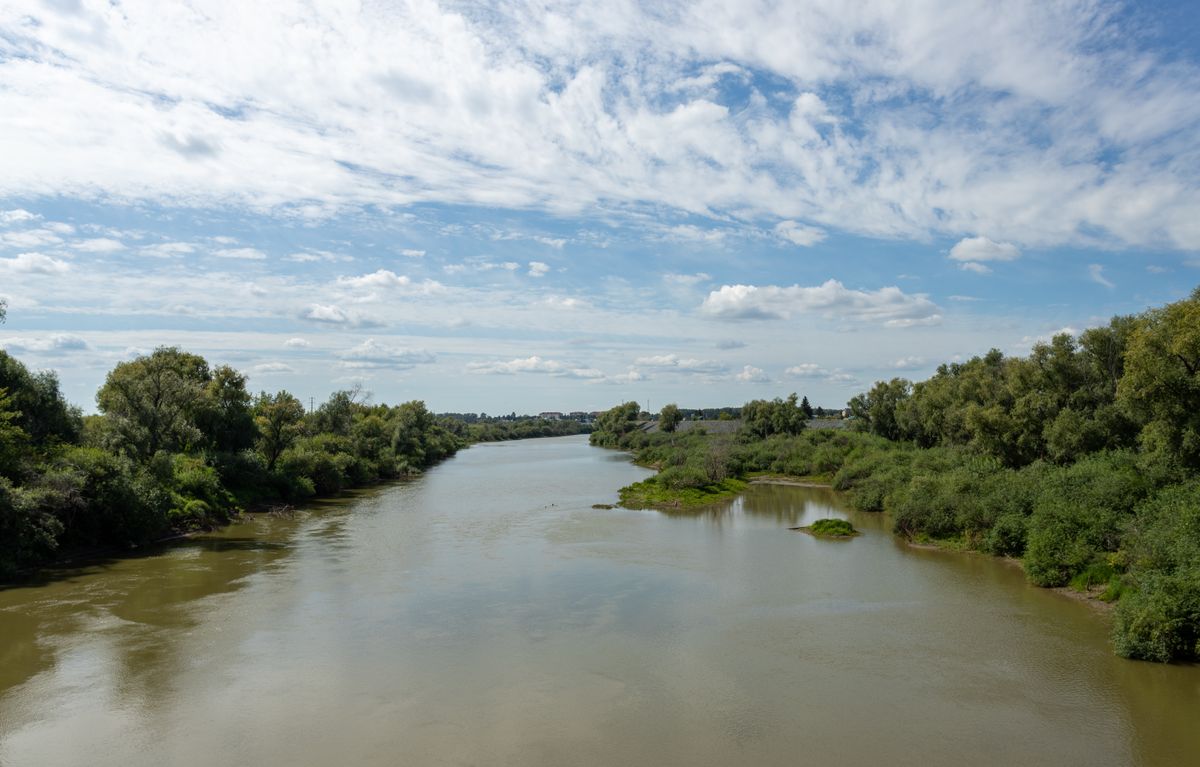
On size, we are going to be careful, because Manitoba's fisheries branch works in length rather than weight and publishes no typical size range. The City of Selkirk, which has more commercial reason to talk it up than the province does, says the river's channel cats "often weigh more than 20 pounds and measure over three feet in length." Take that as municipal enthusiasm with a real basis rather than a stock assessment. The multi-jurisdiction Red River of the North management plan, which Manitoba co-signed, describes the pattern properly: the upper reaches hold high densities of smaller fish, and as the river flows north the population thins out but the fish get much larger. Fish are regularly aged at over 20 years.
Late summer is the window for a plain reason. Channel catfish are a warm-water fish feeding at the peak of their metabolism, and August into September pairs that peak with the most stable river conditions of the year. Then the calendar does something no other Canadian fishery quite manages. As the water cools through September, the walleye that anglers here call greenbacks begin moving upriver out of Lake Winnipeg into the same stretches. The City of Selkirk describes it well: "In late September trophy-sized walleye enter the Red River in pursuit of their favourite food source, the emerald shiner minnow. Many of these walleye sport an iridescent green colour, a characteristic unique to Lake Winnipeg and its tributaries."
Worth saying that greenback is an angler and regional term, used by the City of Selkirk and Travel Manitoba, not a scientific designation. The underlying autumn movement of Lake Winnipeg fish up into the Red is documented in Manitoba's own fisheries literature. For a few weeks you can fish for the best catfish on the continent in the afternoon and its most famous fall walleye at dusk without lifting the anchor.
One number for honest expectations. Manitoba's Master Angler program has kept official records since 1960 and is the oldest of its kind in North America, and it started earlier still, in 1958, with the Neepawa Game and Fish Association. Its current channel catfish qualifying length is 88.9 cm, or 35 inches (Master Angler rules). Note that the 2026 Anglers' Guide still prints 86.5 cm, so the two official sources disagree by two and a half centimetres. The program page was updated in August 2026, so we are using its number, and if you are on the line, measure carefully and enter anyway.
We are not going to quote a catfish population estimate, because Manitoba does not publish one. The Red River does not appear on the province's list of assessed waterbodies, and under the Red River of the North management plan every coordinated channel catfish population survey has been on the American reaches. The evidence for this fishery is the regulation history, the Master Angler ledger and forty years of results. That is better evidence than a modelled number anyway.
The rules that keep it good
All current for the 2026 season (Manitoba Anglers' Guide 2026):
- Catfish limit 4, none may exceed 60 cm. This is the general provincial limit rather than a Red River specific rule, and there is no catfish exception anywhere in the Southern Division waterbody list, so it is what applies here. Season is open year round. Measure before the fish leaves the water if there is any doubt. The keepers are the eating-size fish. The big ones were never yours to keep.
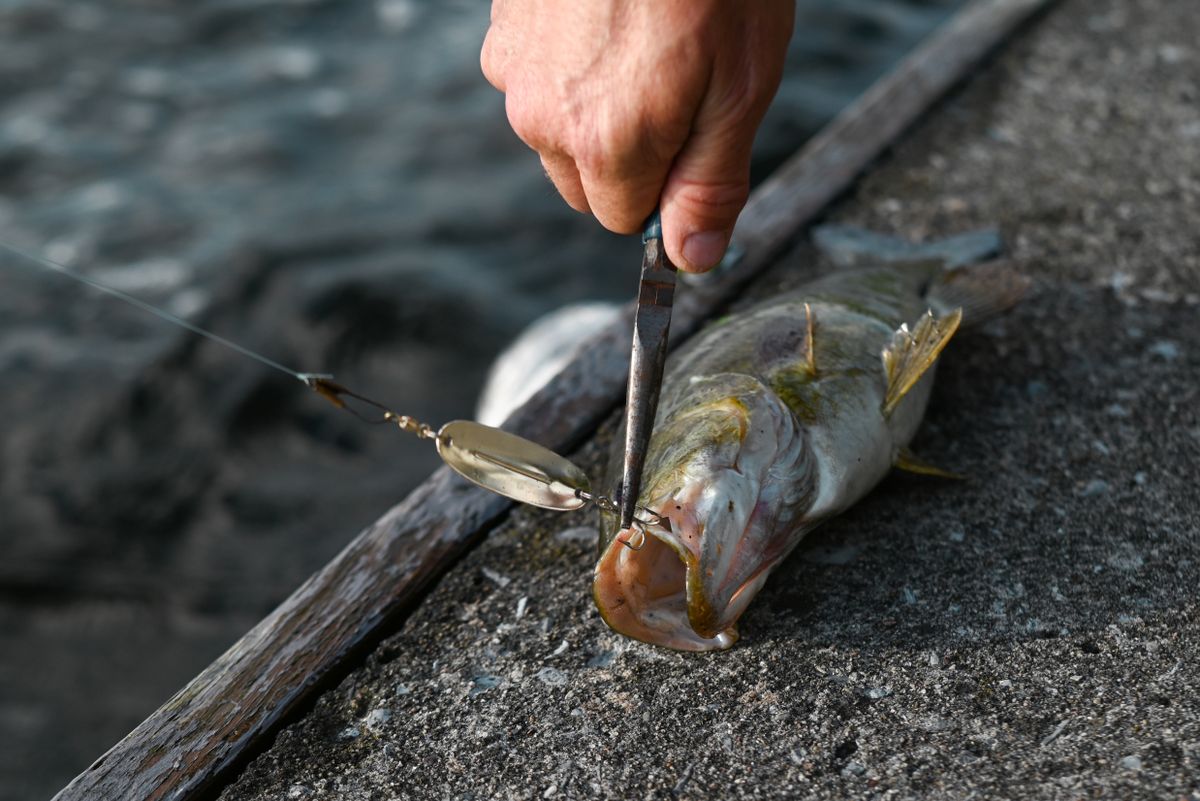
- Barbless hooks, province wide. A barbless hook is one with no barbs, or barbs compressed into complete contact with the shaft. Barbs on the shank for holding bait are fine, and barbed hooks may be kept in the tackle box. Circle hooks, the standard Red River catfish rig, pinch down easily and lose almost nothing in hook-up rate.
- Walleye, the current rule. Limit 4 for walleye and sauger either or combined, and none may exceed 55 cm. On the Red from the Canada and US border to Lake Winnipeg, and all tributaries between Lockport Dam and Lake Winnipeg, anything shorter than 35 cm must be released. So your keeper window in September is 35 to 55 cm, and the greenback of a lifetime goes back. Anyone telling you that you may keep one walleye over 70 cm a year is quoting a rule Manitoba repealed in 2023.
- The dam closure, and this is the big one. The Red River at the St. Andrews Lock and Dam is a Special Conservation Area for pelicans and is "closed to all fishing and possession of fishing gear from April 1 to and including November 15." The guide gives an exact four-sided boundary using the chain link fences and the first freestanding bridge pier. That covers the whole late summer season, so plan to fish below it rather than in it.
- Also at Lockport. From the dam to 1 km downstream, dip netting and seining are permitted for bait fish only, not suckers, and no bow fishing is allowed.
- The spring closure is real but past. The Red between Lockport Dam and Lake Winnipeg, plus tributaries upstream to PTH 9 and PTH 59, closes to all fishing 6 April to 8 May. It has no bearing on a late summer trip, but it is one reason the fishery you are enjoying exists.
- Licences. Published fees are before GST: resident annual $28, Canadian resident $43, non-Canadian $69, with one-day licences at $13, $18 and $26. Sold through Manitoba eLicensing, valid 1 May 2026 to 30 April 2027. Manitoba residents 65 and over need no licence, and neither do resident active military members and veterans. The old conservation licence no longer exists: Manitoba replaced the conservation and regular categories with a single annual licence per residency type in 2023, and added the one-day option.
Handling is the unwritten rule. A 90 cm catfish is decades old. Support the belly, do not lift it vertically by the jaw, keep it over the water or a wet surface, and put it back the way the slot intends.
The invasive species rules on this water
This section is here because the Red is not just any river. Zebra mussels were introduced into Lake Winnipeg's south basin in 2013 and detected in the Manitoban portion of the Red River in 2015, and Manitoba notes that once they establish in a large water body they are cost prohibitive to eradicate (Province of Manitoba).
The obligations are legal, set out in the aquatic invasive species regulation under The Water Protection Act and summarised in the Anglers' Guide as five duties: clean, drain with all plugs kept out while transporting over land, dry completely or decontaminate, dispose of bait, and decontaminate if the watercraft or equipment was last used in an AIS Control Zone. When the province announced the 2026 guide it put the standard in one line: anglers should ensure "all watercraft and water-related equipment are clean, drained, dried and, if necessary, decontaminated after use in any Manitoba water body" (Province of Manitoba, 1 April 2026).
Separately, and this catches people, anyone travelling with a watercraft overland "must stop at all open watercraft inspection stations along your route of travel." For 2026 there is a station at Selkirk Park's main boat launch, which is to say directly where many readers of this article will be putting in (Watercraft Inspection Program).
For a Red River regular that is routine. For the angler who fishes the Red on Saturday and a Whiteshell or Interlake lake on Sunday, it is the most important paragraph in this article. Moving a boat from mussel-positive water to clean water without following the rules is how a province loses lakes.
Access, launches and reading the river
The core water runs from below the Lockport dam downstream toward Netley and Lake Winnipeg. Bank access at Lockport is genuinely good: Lockport Provincial Heritage Park sits on the lower east bank, 20 km north of Winnipeg on PTH 44, and its management plan describes it as "a popular site for picnicking and bird watching, and as an access point to the shoreline for fishing," with stairs down to the lower portion of the site. Read that alongside the Special Conservation Area closure above and you have the real picture: shore fishing at the park, yes, but not inside the closed area at the dam itself until 16 November.
Downstream, Selkirk Park has boat launching docks, and the City notes that plenty of anglers simply fish the Selkirk waterfront from a chair. Manitoba's own Lake Information for Anglers series covers the river in three sheets, Lockport to Highway 4, Highway 4 to Netley Creek, and Netley Creek to Lake Winnipeg, each plotting boat launch symbols (Lake Information for Anglers). The sheets do not name individual ramps and state they are not for navigation, so confirm a specific downstream launch locally before you tow a boat to it.
The technique is not complicated: stout rod, heavy sinker, circle hook, cut bait, patience. The dam tailrace below the closed area, the Selkirk stretch and the deeper outside bends between them hold fish all season.

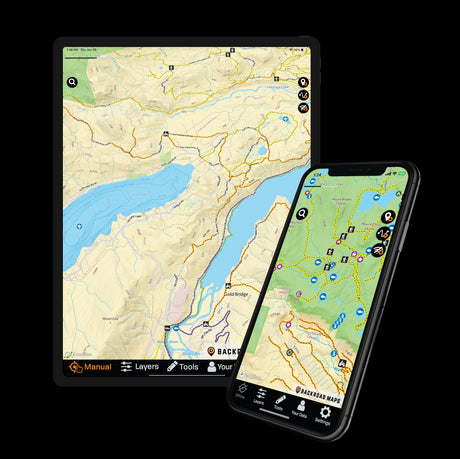
The fishing layer in the BRMB Maps app is useful here for access more than depth: launches, access points and the road grid to reach them, on the same screen as your position. More detail on that side is in our overview of the BRMB Maps fishing app.
Below Selkirk the river winds into the Netley-Libau Marsh, where the Red finally drains into the south end of Lake Winnipeg about 44 km downstream of the dam. That marsh is not just scenery for this article: Manitoba's fisheries work records that channel catfish spawn in the tributaries and channels of the Netley-Libau Marsh, including Netley Creek.
Scout the launches and access roads on BRMB's Manitoba layers before you go, and carry the Manitoba Backroad Mapbook for everything beyond the river valley. If the trip turns into a weekend, our guide to Crown land camping in Manitoba covers the fire and stay rules, which are stricter than most people expect.
One safety note for the greenback weeks. Transport Canada treats water below 15 degrees Celsius as cold water and advises choosing a PFD with thermal protection in it. That is guidance rather than a requirement for a pleasure craft, but the fall walleye run is fished almost entirely on the cold side of that line, in an open boat, often at dusk. Dress for immersion, not for air temperature.
FAQ
When is the best time to fish for catfish on the Red River?
Late summer. Channel cats feed hardest in the warmest, most stable water of the year, from midsummer through September, and by early fall the greenback walleye run overlaps the tail end of the catfish peak on the same water.
Can you keep a big catfish from the Red River?
No. The possession limit is four channel catfish and none may exceed 60 cm, so every trophy-class fish must be released. Master Angler starts at 88.9 cm. That rule is the foundation of the fishery.
What licence do you need to fish the Red River?
A Manitoba angling licence: $28 plus GST for a resident annual, $43 Canadian resident, $69 non-Canadian, with one-day options from $13. Manitoba residents 65 and over are exempt. Barbless hooks are mandatory province wide.
Can you fish at the Lockport dam?
Not in the Special Conservation Area. The Red River at the St. Andrews Lock and Dam is closed to all fishing and to possession of fishing gear from 1 April to 15 November to protect pelicans, and the guide sets out the exact boundary. Bank fishing at Lockport Provincial Heritage Park and the water below the closed area are open.
What are the invasive species rules on the Red River?
Zebra mussels were found in the Manitoban Red in 2015 and in Lake Winnipeg in 2013, so watercraft and water-related equipment must be cleaned, drained with plugs out, dried or decontaminated, and you must stop at every open watercraft inspection station on your route. There is a station at Selkirk Park's main boat launch for 2026.
Wrap up
The Red shows that world-class does not have to mean remote. Twenty minutes from a major city, a $28 licence, a lawn chair at Lockport, and one of the best channel catfish fisheries on the continent, protected by a size rule that sends every big fish back and a barbless rule that sends it back healthy. Fish it in the next six weeks and you get it at its peak, with the first greenbacks arriving as a bonus.
Then hold up your end. Stay out of the conservation area at the dam until 16 November, pinch the barbs, support the belly, release everything the rules protect, and clean, drain and dry before the boat touches any other water. Scout the launches, access points and road grid on BRMB Maps, then download the area for offline use, a PRO feature, so the map still works below Selkirk where coverage gets thin. Start planning on the BRMB Maps Explore Canada hub.