Summary: Fall walleye fishing in Ontario is wide open. Almost every Fisheries Management Zone runs to December 31, and Lake Erie has no closure at all. The important exception is Lake Nipissing, which shuts on October 15 and carries a mandatory 40 to 45 cm harvest slot with a Sport limit of two. The province begins its own fall walleye netting when the surface cools to 15 degrees Celsius and stops at 10, which is worth knowing twice over, because 15 degrees is also the water temperature at which Transport Canada requires cold water immersion protection on board.
Walleye is the most targeted species in Ontario, and fall is when the good ones move. That part is not in dispute.
What is in dispute, or at least unsupported, is most of what gets written about it. Backroad Maps has mapped this province for more than 30 years, and when we went looking for a government or peer-reviewed source for the standard fall walleye story, the one where fish drop deep, then push shallow, then scatter at turnover, we could not find one. Not in the Ontario fishing regulations, not in the Broad-scale Monitoring program, not in the Great Lakes Fishery Commission literature.
So this guide does something different. It gives you the seasons and limits exactly, then tells you what Ontario actually measures in the fall and what it does not, and leaves the folklore labelled as folklore. That is more useful than a confident sentence with nothing behind it.
"Walleye are the most sought species on Lake Nipissing. Each year more than 70% of recreational angling effort and approximately 90% of commercial angling effort targets walleye." (Ontario Ministry of Natural Resources, Lake Nipissing Fisheries Management Plan)
Key takeaways
- Ontario has 20 Fisheries Management Zones and walleye rules change at every zone line. Most zones run to December 31 and reopen January 1.
- Lake Erie, FMZ 19, is open all year with the highest Sport limit in the province at 6 walleye and sauger combined, and no size limit.
- Lake Nipissing closes October 15, with a mandatory 40 to 45 cm slot and a Sport limit of 2. Plan around it, do not assume.
- A Conservation licence is half the Sport walleye limit in almost every zone, and a third of it on Lake Erie. It costs $15.07 against $26.57 for a resident.
- Ontario's Fall Walleye Index Netting season runs from a 15 degree surface temperature down to 10 degrees, roughly a six to eight week window from mid September.
The zone system, and why it matters more in fall
"This map identifies the 20 Fisheries Management Zones within Ontario" (Ontario Fisheries Management Zones). Each zone sets its own walleye season, catch limits and size rules, and individual waterbodies inside a zone can carry exceptions that override the zone wide rule. Lake Nipissing, Lac Seul, Lake of the Woods and Rainy Lake all do.
That matters more in autumn than in June, because fall is when the closures start arriving at different times. Get it wrong and you are fishing a closed season on a lake that was open the week before.
2026 walleye seasons by zone
- FMZ 4, northwest including Lac Seul: January 1 to April 14, and the third Saturday in May to December 31.
- FMZ 5, Kenora, Lake of the Woods and Rainy Lake: January 1 to April 14, and the third Saturday in May to December 31.
- FMZ 11 zone wide: January 1 to the third Sunday in March, and the third Saturday in May to December 31.
- Lake Nipissing, the exception inside FMZ 11: January 1 to March 15, and the third Saturday in May to October 15.
- FMZ 15, eastern and central: January 1 to March 15, and the third Saturday in May to December 31.
- FMZ 18, southeastern including the Ottawa River: January 1 to March 1, and the second Saturday in May to December 31.
- FMZ 19, Lake Erie: walleye and sauger combined, open all year.
- FMZ 20, Lake Ontario including the Bay of Quinte: January 1 to March 1, and the first Saturday in May to December 31.
So the answer to "where can I fish walleye in November in Ontario" is: almost everywhere except Lake Nipissing. And the answer to "where can I fish walleye in late April" is FMZ 4 and FMZ 5, which stay open to April 14.
Because these dates are written as floating rules rather than calendar dates, confirm the exact 2026 day against the printed summary before you book a trip.
Limits and slots, zone by zone
This is the part worth screenshotting. S means Sport licence, C means Conservation.
- FMZ 4: S4 / C2, not more than 1 greater than 46 cm. Lac Seul: walleye and sauger combined, S4 / C2, none between 46 and 53 cm, not more than 1 greater than 53 cm.
- FMZ 5: S4 / C2, not more than 1 greater than 46 cm. Non-Canadian residents are limited to S2 daily with a possession limit of 4. Lake of the Woods, Western and Aulneau Peninsula waters: S4 with none between 43 and 70 cm and not more than 1 over 70 cm; C2 with none greater than 43 cm. Rainy Lake: walleye must be between 35 and 45 cm or greater than 70 cm, not more than 1 over 70 cm.
- FMZ 11: S4 / C2, none between 43 and 60 cm, not more than 1 greater than 60 cm. Lake Nipissing: S2 / C1, walleye must be between 40 and 45 cm.
- FMZ 15: S4 / C2, not more than 1 greater than 46 cm. Exceptions requiring walleye greater than 50 cm with S2 / C1 apply on Black Donald Lake, Centennial Lake, Golden Lake, Lake Doré, Meadow Lake and Mud Lake.
- FMZ 18: S4 / C2, walleye must be between 40 and 50 cm.
- FMZ 19, Lake Erie: walleye and sauger combined, S6 / C2, no size limit specified.
- FMZ 20: S4 / C2, not more than 1 greater than 63 cm. The St. Lawrence River portion, east of the Bishops Point line and including Lake St. Francis, has no size limit.
Read Lake Nipissing and FMZ 18 again, because those are mandatory harvest slots, not protected slots. On Nipissing a walleye must be 40 to 45 cm to keep. A 50 cm fish goes back. That is the opposite of how most slot limits work and it catches visitors every year.
Ontario also permits selective live release beyond the daily limit if fish are held in a mechanically aerated livewell and size limits are respected, provided you never exceed the daily limit at any one time. In a slot fishery that rule is your friend.
What a licence costs in 2026
An Outdoors Card is $8.57 and valid three calendar years. On top of that, for Ontario residents (resident fees):
- Sport: $26.57 for one year, $79.71 for three.
- Conservation: $15.07 for one year, $45.21 for three.
Canadian residents from outside Ontario pay $55.81 Sport and $33.43 Conservation. Non-Canadian residents pay $83.19 Sport and $52.71 Conservation. Ontario residents under 18 and 65 or over do not need a card or licence, but must carry government ID showing name and date of birth.
The province defines the difference honestly: Sport is "For anglers who want full catch and possession fishing privileges" and Conservation is "ideal for anglers who want to live-release the majority of fish caught." If you fish four times a year and keep a meal twice, Conservation saves you $11.50 and costs you two fish per outing.
What Ontario actually measures in the fall
Here is the genuinely useful, genuinely sourced part, and it comes from the province's own survey protocol.
Ontario runs Fall Walleye Index Netting, and the season is defined by temperature rather than by date: "Sampling starts once surface water temperatures have cooled to 15°C (Celsius) and may continue until surface temperature reaches 10°C (Celsius)." In most of the province that is a six to eight week window from mid September into late October or early November (FWIN instructions).
Within that window, the province nets in two depth strata: a shallow stratum of 2 to 5 metres and a deep stratum of 5 to 15 metres, using a gillnet gang 1.8 metres deep by 61 metres long. Be careful how you read that. It is a standardised survey design, not fishing advice. What it does tell you is the depth band in which the Ontario government expects to encounter walleye when the surface is between 15 and 10 degrees, and that is a legitimate starting point for a search.
On the physics of turnover, the honest version: water is at its densest near 4 degrees Celsius, and as autumn proceeds "the surface waters cool and sink, mixing the epilimnion down towards the hypolimnion and weakening the thermocline," until "the entire lake is the same temperature (isothermal)" (IISD Experimental Lakes Area). What follows from that is only this: once a lake goes isothermal, temperature stops confining fish vertically. No source we could find links turnover to walleye catchability, so we are not going to claim one.
What science does support is light. USGS research states plainly that "Walleye prefer cool water and low light conditions," and a 2023 paper in the Canadian Journal of Fisheries and Aquatic Sciences found that "Thermal-optical habitat changed in 59% of lakes since 1980" and that this "appears to be driven primarily by changes in water clarity and thus optical habitat area" (USGS, Mahlum et al. 2023). Practical read: in fall, low light windows and stained or wind-churned water are working in your favour, and clear calm midday is not.
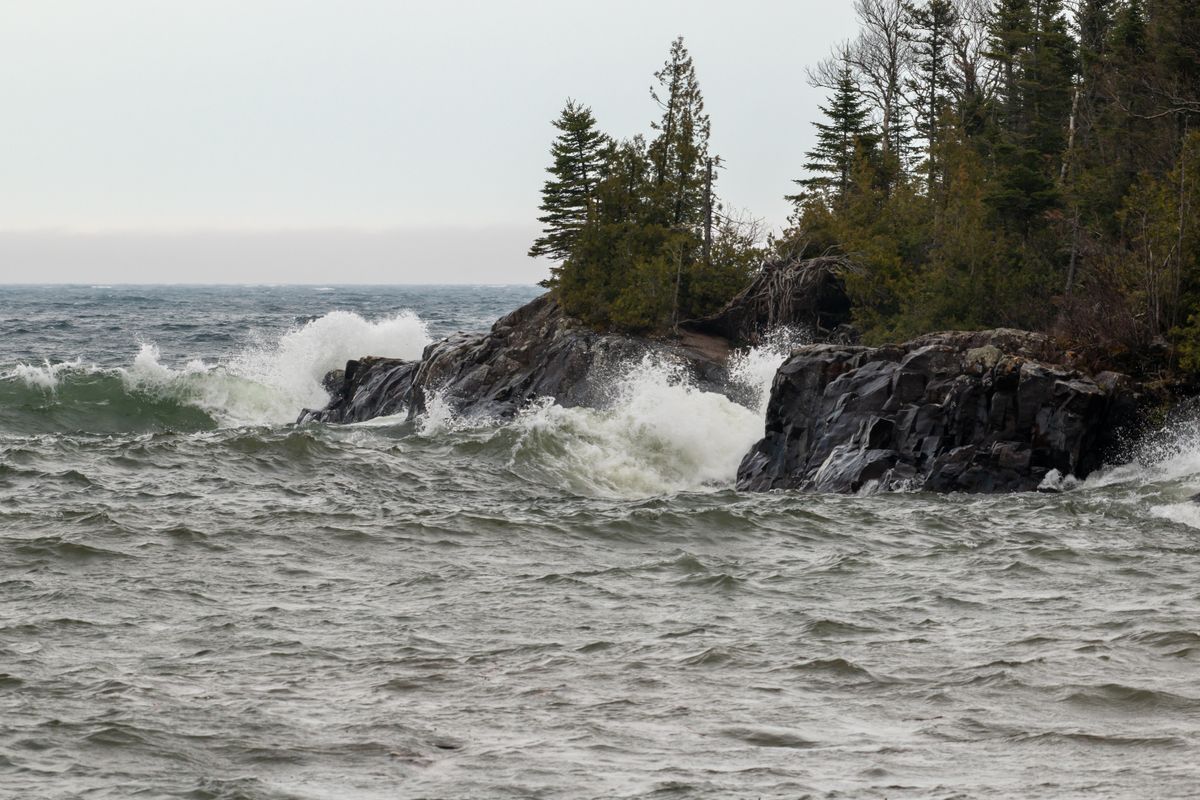
Where the walleye are, and where they are struggling
Ontario holds 250,000 inland lakes and 24 percent of Canada's fresh water, and walleye is "the most targeted species by all sampled anglers" in both the 2015 and 2020 recreational fishing surveys. In 2020 an estimated 11.08 million walleye were caught in Ontario and about 3.24 million harvested, a 29.2 percent harvest rate, by roughly 1.15 million active anglers spending about $1.74 billion.
Now the uncomfortable part, because it changes where you should fish.
FMZ 18, the southeastern zone including the Ottawa River, is officially struggling: "walleye populations in FMZ 18 are currently considered to be at relatively low abundance and are showing signs of high mortality." The FWIN catch rate there averages 3.0 walleye per net against 7.9 and 15.8 per net in northern zones, and only 4 to 7 percent of walleye sampled were age 10 or older. The province names two drivers: climate warming that "is favouring the habitat of warmwater species such as bass and not coolwater species such as walleye", and zebra mussels increasing water clarity, which reduced "the walleye's competitive advantage as a predator in turbid waters" (FMZ 18 management plan).
Lake Nipissing is similar. The lake covers 87,325 hectares and the province describes a population "exhibiting many signs of a stressed fishery," with "the current population [at] half of what it was in the 1980s" (Lake Nipissing data review). That is why the season closes October 15 and the slot is 40 to 45 cm.
Lake Erie is the other end of the spectrum. The Great Lakes Fishery Commission's Walleye Task Group estimated the 2025 west-central population at 80.6 million age 2 and older walleye, projected to decline to 57.6 million age 2+ in 2026. The 2025 total allowable catch was 11.373 million fish, and the calculated mean recommended allowable harvest for 2026 was 8.617 million, with Ontario holding 43.06 percent of the quota area share. The 2021 year class alone accounted for an estimated 21.1 million age 4 fish, 26 percent of the age 2 and older population (Walleye Task Group, 2026). Note that 8.617 million is the scientific recommendation, not the final adopted TAC.
The northwest zones, FMZ 4 and FMZ 5, carry the strongest protected slots in the province, which is itself a signal of what those fisheries are worth. Lac Seul protects 46 to 53 cm. Lake of the Woods protects 43 to 70 cm on the Western and Aulneau Peninsula waters.
Finding structure before you burn the day
Fall walleye is a search problem on big water, and the search is faster on a depth chart than on a fish finder.

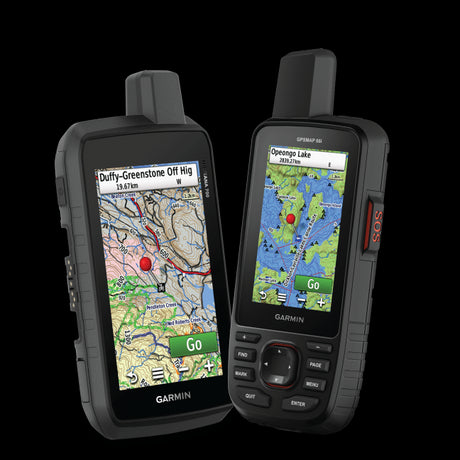
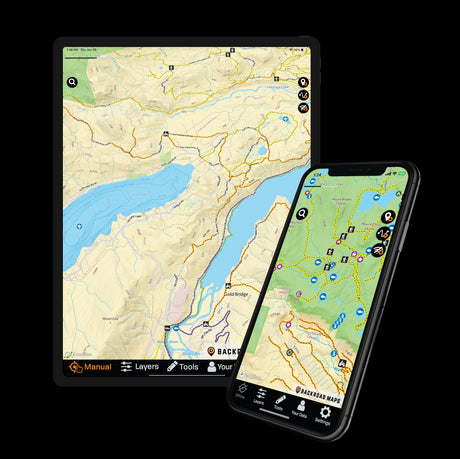
The lake depth and fishing layers in the BRMB Maps app let you pick out the breaks, shoals and points that sit inside that 2 to 15 metre band before you launch, then run to them instead of hunting for them. On a lake you have never fished, that is the difference between a day and three days. Details on the fishing side are in our overview of the BRMB Maps fishing app.
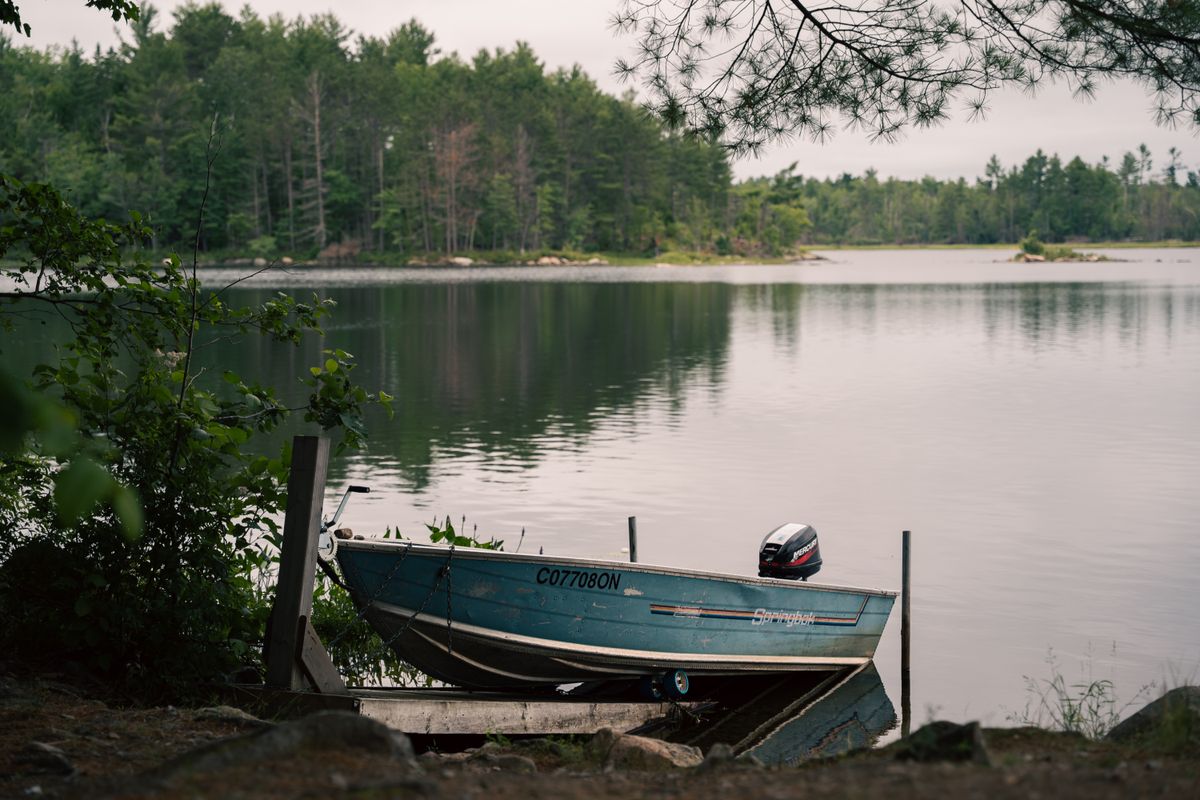
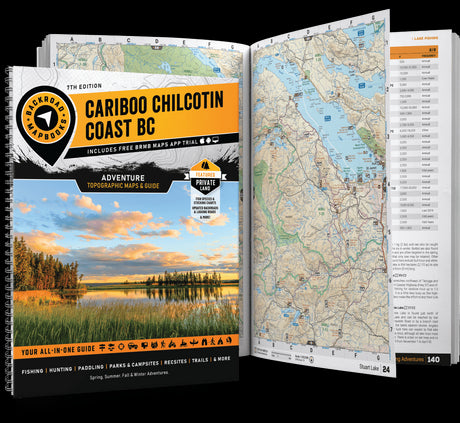
The other half is getting there. Many of the best fall lakes sit at the end of a resource road, and the road class decides whether you are towing a boat in or walking. Scout access and launches on BRMB's Ontario layers, and carry the Northwestern Ontario Backroad Mapbook as the paper backup. If you are chasing the same species west, our guide to walleye fishing in Saskatchewan covers a very different rule set.
The 15 degree rule that is not about fishing
The same number that starts Ontario's fall netting season starts a legal obligation on your boat. Transport Canada: "If you operate a vessel in water colder than 15 degrees Celsius, you're required to have procedures in place or equipment to protect everybody on board from hypothermia and cold shock resulting from immersion in the water" (Transport Canada).
Which is to say: by the time walleye fishing gets good in the fall, you are legally in cold water territory. Transport Canada's reasoning for wearing rather than stowing your PFD is worth quoting: "Because cold-water exposure can cause swimming failure within minutes, you might not have time to put it on once you're in the water." The four stages of cold water immersion are "cold shock, swimming failure, hypothermia and post rescue collapse", and hypothermia is defined as a body core temperature of 35 degrees.
Mandatory equipment for a motorised pleasure craft up to 6 metres (Transport Canada):
- An appropriately sized Canadian-approved PFD or lifejacket for every person on board.
- A buoyant heaving line 15 metres in length.
- A manual propelling device, or an anchor with at least 15 metres of rope, cable or chain.
- A bailer or hand pump, and a sound-signalling device.
- Navigation lights if used between sunset and sunrise or in reduced visibility.
- A waterproof flashlight, or 3 Canadian-approved flares of type A, B or C.
A vessel licence is required if the craft has any motor of 10 hp (7.5 kW) or more, and a class 5BC fire extinguisher is mandatory with inboard motors or fixed fuel tanks.
FAQ
Is walleye season open in Ontario in the fall?
Yes, in almost every zone. FMZ 4, 5, 11, 15, 18 and 20 all run to December 31, and FMZ 19 on Lake Erie is open all year. The main exception is Lake Nipissing, which closes October 15.
What is the walleye limit in Ontario?
It depends on the zone. Sport 4 and Conservation 2 covers most of the province. Lake Erie is Sport 6 and Conservation 2 for walleye and sauger combined. Lake Nipissing is Sport 2 and Conservation 1 with a mandatory 40 to 45 cm slot.
What is the difference between a Sport and a Conservation fishing licence?
Sport gives full catch and possession privileges. Conservation is for anglers who release most of what they catch, and the walleye limit is half the Sport limit in most zones. Resident Sport is $26.57 and Conservation is $15.07 for one year.
What depth should I fish for fall walleye in Ontario?
There is no official angling recommendation. What the province publishes is its own survey design: Fall Walleye Index Netting sets nets in a 2 to 5 metre shallow stratum and a 5 to 15 metre deep stratum once the surface has cooled to 15 degrees. Treat that as a search band, not as advice.
Do I need extra safety equipment for fall fishing in Canada?
Yes. Transport Canada requires procedures or equipment to protect everyone on board from hypothermia and cold shock when operating in water colder than 15 degrees Celsius, on top of the standard mandatory equipment list for your vessel size.
Wrap up
The fall walleye season in Ontario is longer and more open than most anglers realise, and the real work is in the details: which zone, which slot, and whether the lake you picked closes in October. Check the zone page for the exact water you are fishing, because a waterbody exception beats the zone rule every time.
Then be honest about the fishing itself. Cool water, low light and wind are on your side. A specific depth is a search band, not a promise. And by the time the surface is at 15 degrees, cold water protection is not optional gear, it is a legal requirement.
Scout depth contours, launches and access roads on BRMB Maps, then download the lake for offline use, a PRO feature, so the chart is still on screen when the signal drops on the way in. Start planning on the BRMB Maps Explore Canada hub.