Summary: Whitetail deer hunting in Saskatchewan does not require a draw if you are a resident, and the licence is $45. What changed for 2026 is the Grassland: zones 1 to 16 and 18 to 29 are now buck only, with a rifle season squeezed into November 20 to 30. Elsewhere the seasons are longer and either sex. The province estimates 14,533 whitetails were taken in 2025 at 44 percent success, the rut peaks November 10 to 15, and mandatory chronic wasting disease zones moved again this year. Here is the full picture, zone by zone.
Saskatchewan is where the world record typical whitetail came from. That is not marketing, it is the record book.
Backroad Maps has charted this province for more than 30 years, and the file has changed shape recently. The Boone and Crockett Club's world record typical whitetail, scoring 213 and 5 eighths, was taken by Milo N. Hanson near Biggar, and B and C's own words are "Saskatchewan is legendary for producing giant whitetail deer." That reputation is intact. The population, in parts of the province, is not.
The Ministry of Environment is direct about it: "White-tailed deer populations have continued to decline across much of the Grassland region and remain near recent lows in the Parkland and Forest Fringe regions." That single sentence explains almost everything about the 2026 regulations.
"The move to a buck-only season structure is intended to support population recovery by protecting the reproductive cohort, similar to recent changes to mule deer seasons." (2026-27 Saskatchewan Hunters Guide)
Key takeaways
- Saskatchewan residents buy whitetail licences over the counter. No draw. The resident licence is $45 plus a mandatory $20 wildlife habitat licence.
- New for 2026: WMZs 1 to 16 and 18 to 29 are buck only, with rifle season November 20 to 30 only. Most other zones remain either sex with longer seasons.
- The peak breeding period for western Canada is November 10 to 15, according to the Government of Saskatchewan.
- 2025 season: 36,451 regular whitetail licences sold, 44 percent success, an estimated 14,533 deer taken, of which 12,423 were adult males.
- Landowner permission is mandatory on all private land, posted or not, and roughly 85 percent of southern Saskatchewan is privately owned or controlled.
The zone system, and who needs a draw
Saskatchewan runs 83 wildlife management zones in total. They are numbered 1 through 76 with lettered subdivisions such as 2E and 2W, 7E and 7W, 14E and 14W, plus three urban zones: Saskatoon, Regina and Moose Jaw, and Prince Albert. Boundaries are legally defined by The Wildlife Management Zones and Special Areas Boundaries Regulations, 1990 (2026-27 Saskatchewan Hunters Guide).
Here is the part out of province hunters get wrong. Saskatchewan residents do not enter a draw for whitetail. The Big Game Draw covers elk, moose, pronghorn and mule deer. The whitetail draw is the separate Canadian Resident draw, for hunters whose principal residence is in Canada but outside Saskatchewan. For 2026 it opened May 1 and closed May 28 at 4:00 pm, results came in June, and licences went on sale August 1 (Big Game Draw). The guide is blunt on late applications: "Late submissions cannot be accepted, there are no extensions or exceptions."
Non Canadian hunters have no self guided option: "All non-resident big game hunters (white-tailed deer, moose, bear and wolf) and Canadian resident moose hunters must use the services of an outfitter and possess the appropriate guided licence." Canadian residents holding a draw whitetail licence, by contrast, "have the option to hunt with or without an outfitter and do not require a guided licence."
What it costs
All figures include GST, from the 2026-27 fee schedule:
- Wildlife habitat licence, required of every hunter: $20, added automatically once per year.
- Saskatchewan resident white-tailed deer: $45.
- Saskatchewan resident antlerless white-tailed deer: $35.
- Youth white-tailed deer, residents aged 12 to 18: $10.
- Canadian resident white-tailed deer draw: $180. Draw application fee $10.
- Guided white-tailed deer, Canadian and non resident: $360.
- Saskatchewan resident veterans: free.
New for 2026, and worth noting on your calendar: hunters who miss the Hunter Harvest Survey deadline are charged a $15 fee on their next licence purchase the following year. A HAL account is mandatory to apply, check results and buy online.
2026 seasons, zone by zone
This is where the buck only change bites. The four structures that cover most of the province:
WMZs 1 to 16 and 18 to 29, the Grassland, including the Cypress Hills West Block and Saskatchewan Landing. Buck only, one deer. Archery September 15 to October 14. Muzzleloader and crossbow October 1 to 14. Rifle November 20 to November 30. That is an eleven day rifle season, and it opens ten days after the rut peak.
WMZs 17, 30 to 47, 52 and 54, including Duck Mountain and Moose Mountain provincial parks. Either sex. Archery September 1 to October 31. Muzzleloader and crossbow October 1 to 31. Rifle November 15 to December 2. This is the classic Parkland structure and the rifle season straddles the rut.
WMZs 56 to 69, the northern and forest zones, including Greenwater Lake, Meadow Lake, Narrow Hills, Porcupine Hills, Wildcat Hill and Bronson Forest. Either sex. Archery, muzzleloader and crossbow September 1 to October 31. Rifle October 1 to December 7. A rifle season of more than two months.
WMZs 48 to 50, 53, 55 and the Fort à la Corne WMU. Either sex. Archery September 1 to October 31, muzzleloader and crossbow October 1 to 31, rifle November 1 to December 7.
Further north, WMZs 70 to 73 including Lac La Ronge Provincial Park run every method from September 1 to December 7. The urban zones are their own animal: in Regina and Moose Jaw and in Saskatoon, archery and crossbow run September 1 to December 2, muzzleloader from October 1, shotgun from November 1, and rifle hunting is not permitted at all. The Prince Albert WMZ is archery and crossbow only.
Two details that catch people. Antlerless whitetail licences are valid only in the Saskatoon, Prince Albert and Regina and Moose Jaw zones, where antlerless means "a doe or 2026 fawn." And in provincial parks and recreation sites that have a September whitetail season, hunting does not begin until September 10.
When the rut actually peaks
The Government of Saskatchewan publishes this directly: "The peak breeding period for western Canada is Nov 10 - 15." The same page notes that "Males will commonly lose up to 20 per cent of their pre-rut body weight during the breeding season" (Government of Saskatchewan).
That timing is why the seasons look the way they do. Northern latitudes compress the rut. As the Mississippi State University Deer Lab puts it, "In the northern regions of North America, with extreme selection pressures on fawn survival, breeding season is typically early and of short duration" (MSU Deer Lab).
Practical read: in the Parkland zones with a November 15 rifle opener, you are hunting the tail of the peak and the post rut, which is when big bucks are moving in daylight and losing caution. In the Grassland, with a November 20 opener, the peak is over and you are hunting recovery patterns near food. Those are two different hunts and they call for two different setups.
What the harvest data says
The 2025 numbers are the clearest picture available (2025 Hunter Harvest Survey results):
- 36,451 regular whitetail licences sold, 22,601 surveys completed, 44 percent harvest success.
- Estimated total harvest 14,533, with a 95 percent confidence interval of 14,293 to 14,774.
- Composition: 12,423 adult males, 1,931 adult females, 179 young.
- Canadian resident draw: 995 licences, 53 percent success, an estimated 507 deer against a quota of 1,505.
- Province wide, 113,673 hunting licences were purchased in 2025 and 71,732 harvest surveys were completed, a 63 percent response rate, the highest since surveys became mandatory in 2020.
Notice that adult males made up 85 percent of the take even before the buck only change. And notice the draw quota went barely a third used. If you are an out of province Canadian, that draw is not the lottery you might assume.
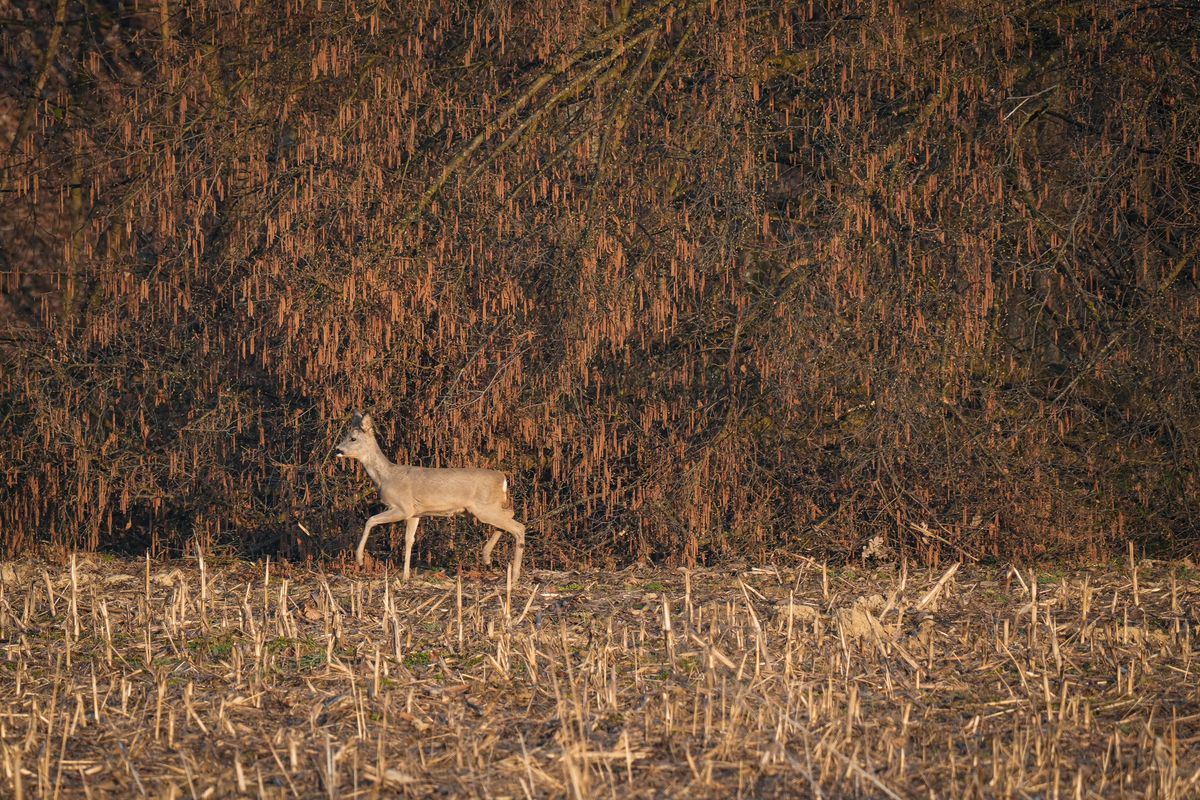
Permission is the whole game here
Saskatchewan changed its trespass law effective January 1, 2022, and it moved the burden onto you. Previously landowners posted land to keep people out. Now "those wishing to access a rural landowner's property for recreational purposes will need to gain consent from the owner," and the change "moves the onus of responsibility from rural landowners to individuals seeking to access their property" (Government of Saskatchewan).
The Hunters Guide states it as a rule: "Landowner permission is mandatory prior to accessing or hunting on private land, including setting out trail cameras, tree stands or blinds." So your scouting camera in September needs the same permission your rifle does in November. Consent can be written, electronic, oral or by signage.
Two more that catch honest hunters. "Approximately 85 per cent of the land in southern Saskatchewan is privately owned or controlled." And if you wound a deer that runs onto private land, "it is the hunter's responsibility to contact the owner or occupant to obtain permission before entering."
There is public ground. Fish and Wildlife Development Fund land owned solely by the Ministry of Environment can be accessed without permission, and those parcels are listed on the province's HABISask mapping system. FWDF land is foot access only, no baiting, and any stand must be marked with your name or HAL number and "must be removed at the end of legal hunting time on the day it was placed."
Knowing which side of the line you are on
A treed bluff on the prairie can be deeded, leased, community pasture or Ministry land, and from the road they look identical. Getting this wrong is not a technicality in Saskatchewan, it is the offence.

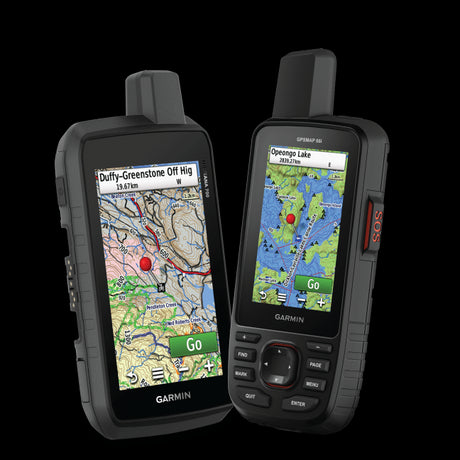
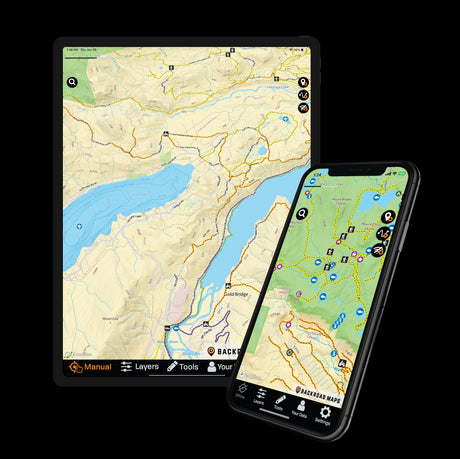
The Crown land and private land layers in the BRMB Maps app put that boundary on the same screen as your GPS position and the road network, which is what you actually need before you park the truck. Cross reference with HABISask for FWDF parcels and with the RM office for landowner maps, though the guide notes "it is the discretion of the office whether an RM/Landowner Map will be granted to a hunter."
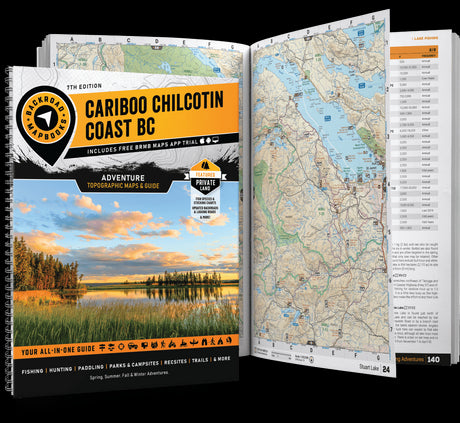
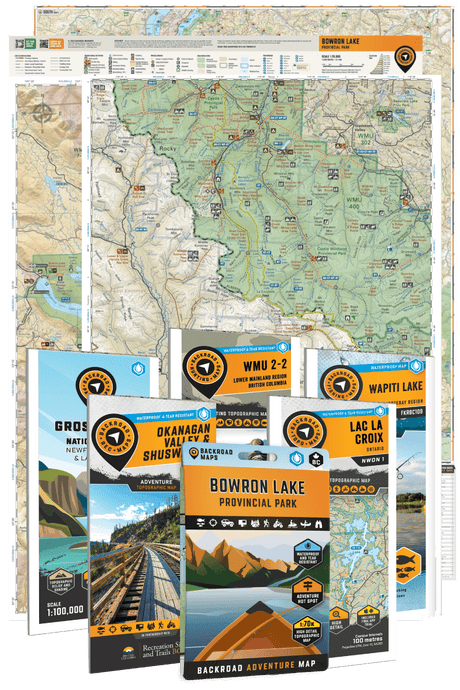
Plan your access on BRMB's Saskatchewan layers before you leave home. The current Saskatchewan Backroad Mapbook is the paper backup, and the hunting TOPO series covers zones at a working scale. Offline map download is a PRO feature, and in the Forest Fringe you will need it.
Roads, vehicles and pastures
The rules that end hunts, all from the Hunters Guide:
- Unlawful to "Shoot across or along a provincial highway, provincial road or municipal road."
- Road Corridor Game Preserves: "Hunting is prohibited within 400 metres of the centerline of a road within a RCGP." They are shown on the WMZ map and signed.
- Unlawful to hunt within 500 metres of a building, stockade or corral occupied by people or livestock without consent.
- Unlawful to carry a loaded firearm in or on a vehicle or on horseback. A muzzleloader counts as loaded once charged with the ignition system in place.
- Night hunting is prohibited, from half an hour after sunset to half an hour before sunrise, and artificial light, infrared and night vision are all prohibited for hunting.
- Drones are prohibited "for any purpose connected with searching for, hunting or killing wildlife."
- In WMZs 15 to 18 and 30 to 34 and the urban zones, you may not drive off roads or road allowances without written landowner permission, except to retrieve a legally killed animal by the most direct route.
- In WMZs 48 to 50, 53 and 55 to 76 and the Cypress Hills West Block, a firearm carried on an ATV must be encased.
Community pastures need a call ahead. You must notify the pasture manager or designated patron, and access generally opens in WMZs 1 to 47 from November 1, WMZ 54 from November 10, and WMZs 48 to 50, 52, 53, 55 and 68N from November 15.
CWD: the zones changed again
Chronic wasting disease was first detected in Saskatchewan in 1997, on a captive elk farm. As of the 2025-26 surveillance summary, 66 of the province's 83 WMZs have tested positive. That season saw 2,900 hunter submissions and 362 positive cases: 195 white-tailed deer, 125 mule deer, 33 elk and 9 moose (CWD surveillance summary).
For 2026-27 the mandatory zones moved. Testing is mandatory as a condition of the licence for draw and regular season elk, mule deer and white-tailed deer harvested in WMZ 43, 47, 49 and 53, and for elk in WMZ 50 and 55. Outfitters must additionally submit whitetail samples from WMZ 49, 50, 53 and 55 to 69 (Getting your animal tested). Last season the mandatory zones were 43, 47, 50 and 55, so do not work from memory.
The process: get a tracking number by entering your harvest at cwdsk.ca, double bag the head, attach the tag with your tracking number, and drop it at a designated freezer. Testing is free, results take roughly six to eight weeks, animals under one year of age are not tested, and a removed skull cap does not disqualify a trophy head. The published deadline for licensed hunters is January 21, 2027, though note the province writes it as "Sunday, January 21, 2027" and that date is a Thursday, so confirm with the Inquiry Centre if you are cutting it close.
FAQ
Do you need a draw to hunt whitetail deer in Saskatchewan?
Not as a Saskatchewan resident. The resident whitetail licence is over the counter at $45. Canadian residents from outside the province apply through the Canadian Resident white-tailed deer draw, which closed May 28, 2026. Non Canadian hunters must use an outfitter.
What are the 2026 whitetail season dates in Saskatchewan?
They vary by zone. In the Grassland zones 1 to 16 and 18 to 29 it is buck only with rifle November 20 to 30. In zones 17, 30 to 47, 52 and 54 it is either sex with rifle November 15 to December 2. In zones 56 to 69 rifle runs October 1 to December 7.
When does the whitetail rut peak in Saskatchewan?
The Government of Saskatchewan gives the peak breeding period for western Canada as November 10 to 15. Bucks commonly lose up to 20 percent of their pre rut body weight over the breeding season.
Which Saskatchewan zones require CWD testing in 2026?
Mandatory as a licence condition for elk, mule deer and whitetail taken in WMZ 43, 47, 49 and 53, and for elk in WMZ 50 and 55. Outfitters must also submit whitetail from WMZ 49, 50, 53 and 55 to 69. Testing is free and the hunter deadline is January 2027.
Do I need permission to hunt private land in Saskatchewan?
Yes, always, posted or not. Since January 1, 2022 consent is required for recreational access to rural private property, and that includes placing trail cameras, tree stands and blinds. Roughly 85 percent of southern Saskatchewan is privately owned or controlled.
Wrap up
Saskatchewan still deserves its reputation, but 2026 is not 2016. If you hunt the Grassland, plan for eleven days of rifle season on bucks only and build the trip around food sources after the rut. If you want length and either sex flexibility, the Parkland and Forest Fringe zones give you weeks instead of days. Either way, secure permission before the season, not during it, and check this year's CWD zones rather than last year's.
Do the map work first. Know which parcel is deeded, which is Ministry land you can walk, and which road you cannot shoot along. Scout Crown land, private land and access roads on BRMB Maps, then download the area for offline use, a PRO feature, so the boundaries are still on screen out where there is no service. Start planning on the BRMB Maps Explore Canada hub.