Summary: Grouse hunting in Ontario is the cheapest big opportunity in Canadian hunting. Ruffed grouse is open in all 95 wildlife management units, requires no tag and no draw, and a resident needs only an Outdoors Card at $8.57 and a small game licence at $22.76 to hunt the whole season. Northern units open September 15 with a combined daily limit of five, southern units open September 25 and most drop to two. Here are the real dates by WMU group, the habitat that holds birds, and the rules that end hunts.
Thirty-one dollars and thirty-three cents. That is the entire cost of a legal Ontario grouse season for a resident with no card.
Backroad Maps has charted this province for more than 30 years, and grouse remains the most under-hunted opportunity we map. There is no draw, no tag, no quota and no allocation. Ruffed grouse has an open season in every single one of Ontario's 95 WMUs, and 87 percent of the province is Crown land where "Most Crown land and conservation reserves are available year-round for personal, temporary use at no cost."
What there is instead is a set of details that quietly disqualify people: a licence that is invalid for part of the summer, a bag limit that halves depending on which side of a line you stand, a road rule broader than almost anyone assumes, and an orange clothing requirement that most bird hunters do not think applies to them.
"Every year across Ontario, many of us will gather with family and friends to take part in another hunt. It is a time where knowledge is passed down from generation to generation, stories are told and, most importantly, memories are made." (Hon. Mike Harris, Minister of Natural Resources, 2026-27 Ontario Hunting Regulations Summary)
Key takeaways
- Ruffed grouse has an open season in all 95 Ontario WMUs. No tag and no draw are required for any grouse species.
- Total cost to a resident: $8.57 for an Outdoors Card plus $22.76 for a small game licence, $31.33 all in, HST included. The card is good for three calendar years.
- Northern units open September 15, southern units open September 25. The far north units 1 to 4, 16 to 18 and 24 to 27 run all the way to March 31.
- Daily limit is 5 with a possession limit of 15 through most of the province, dropping to 2 and 6 in WMUs 69A, 70 to 72, 77 to 81 and 85 to 95.
- You must not shoot from or across a right of way for public vehicular traffic anywhere in Ontario, and that definition includes any road or trail open to public vehicle use.
What you need, and what it costs
Three things and nothing else: "Outdoors Card, Small Game Licence listed on your Licence Summary or on the back of your Outdoors Card, proof of firearm accreditation (if you are hunting with a gun)." Tags in Ontario apply to wild turkey and to wolf and coyote in select WMUs. Grouse appears on no tag or draw list anywhere in the 2026 summary (Ontario Hunting Regulations Summary, small game).
2026 fees, HST included (licence information):
- Outdoors Card: $8.57, valid three calendar years.
- Resident small game licence: $22.76 for one year, or $68.28 for three years.
- Non-resident small game licence: $121.52 for one year, or $364.56 for three years.
So a resident with a current card pays $22.76. A resident starting from nothing pays $31.33. The cheapest three season path is $76.85. A non-resident pays $130.09 for a first season, hunts the same seasons and the same limits as residents, and needs no guide or outfitter, unlike bear or moose. Non-residents do need hunter accreditation on file and must be at least 16.
One trap worth circling. There is a summer blackout: "No Small Game Licence is valid from June 16 to August 31 in Northern Ontario and in parts of Central Ontario north of this line (except for falconry)." It does not affect the fall season, but it does mean a licence bought in July is not a licence to go walking in August.
The exact 2026 seasons
Ontario groups ruffed and spruce grouse together in the north and separates them in the south. Straight from the regulations:
Ruffed grouse and spruce grouse, combined season
- WMUs 1 to 4, 16 to 18, 24 to 27: September 15 to March 31. Combined daily limit 5, possession limit 15.
- WMUs 5 to 15, 19 to 23, 28 to 50, 53 to 67, 69B: September 15 to December 31. Combined daily limit 5, possession limit 15.
Ruffed grouse only, no spruce grouse season in these units
- WMUs 68, 73 to 76, 82 to 84: September 25 to December 31. Daily limit 5, possession limit 15.
- WMUs 69A, 70 to 72, 77 to 81, 85 to 95: September 25 to December 31. Daily limit 2, possession limit 6.
Sharp-tailed grouse
- WMUs 1 to 4, 16 to 18, 24 to 27: September 15 to March 31, daily 5, possession 15.
- WMUs 5 to 15, 19 to 23, 28 to 35, 38 to 41: September 15 to December 31, daily 5, possession 15.
- WMUs 36, 37, 42 to 50, 53 to 67, 69B: September 15 to December 31, daily 2, possession 6.
Ptarmigan
- WMUs 1 to 4, 16 to 18, 24 to 27 only: September 15 to March 31, daily 5, possession 15.
The pattern in those tables is itself a map. Spruce grouse has no season at all in WMUs 68, 69A and 70 through 95. Ptarmigan is legal in only 11 units. Sharp-tailed grouse stops at WMU 69B. And the daily limit drop from 5 to 2 across southern Ontario is the ministry telling you, in regulation rather than in prose, where it considers grouse abundant.
One correction worth having in advance. The regulations also publish a separate falconry table with a daily limit of 3 for the same species and overlapping units. Plenty of secondary websites quote that 3 as the general limit. It is not. For gun and bow hunters the number is 5, or 2 in the southern units listed above.

Where the birds actually are: read the aspen
Grouse hunting is habitat hunting. Find the right age of poplar and you find birds, which is why some cutovers hold four flushes an hour and the mature spruce next door holds none.
Ontario confirms the relationship directly: "Trembling aspen provides shade and a food source for deer, moose and other wildlife. Ruffed grouse and other bird species nest in trembling aspen." And the province explains why cutovers and burns produce it: aspen is "a remarkable species for quick growth and establishment on nutrient poor, disturbed or burnt areas" and "develops a large root system from which new trees can sprout" (Government of Ontario, trembling aspen). That is root suckering after logging or fire, and it is the mechanism behind every good grouse cover you have ever hunted.
For the specific age classes, the best published guidance comes from Minnesota DNR rather than Ontario, and it is worth attributing honestly. Minnesota DNR's woodland management guide names three distinct stages grouse need: "Young aspen (6 to 25 years old) to provide nesting cover and supply summer and fall foods", "Dense sapling aspen (4 to 15 years old) to provide brood cover", and "Mature aspen (more than 25 years old) with an under-story of hazel or ironwood." It also notes grouse "prefer to feed on buds in the upper canopy of mature male aspen trees in the winter" and that "high vertical stem densities are important" for brood cover (Minnesota DNR).
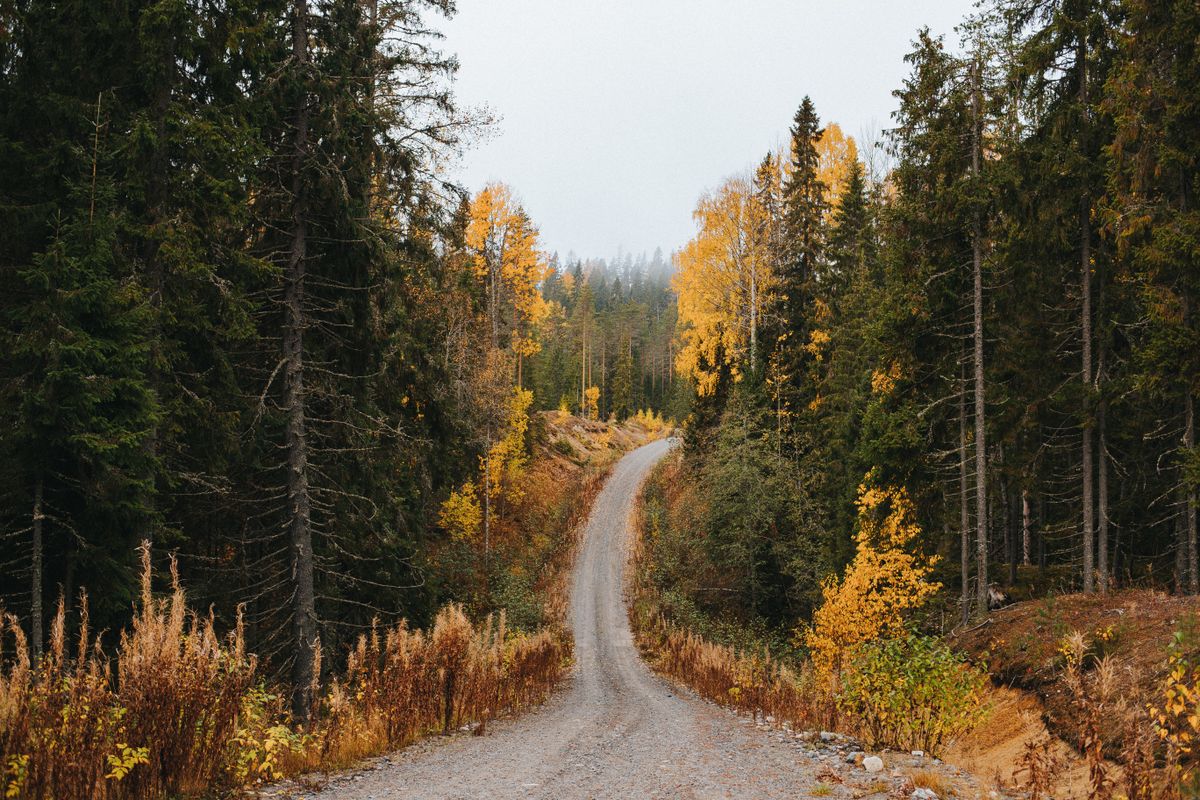
Translate that to a working rule. You are looking for a cut or a burn roughly 5 to 20 years old, thick enough that you cannot see far, next to older poplar. Ontario has plenty: poplar and aspen occur across 16,592,859 hectares and are the lead species on 5,798,466 hectares, about 13.9 percent of the managed forest, covering all of Ontario except the northern fringe near Hudson Bay (Forest Resources of Ontario).
One more Ontario detail with practical use: "Ruffed grouse use fallen drumming logs to attract mates." A cover with big deadfall on the ground in young poplar is a cover a bird has already chosen.
On the cycle, be careful what you believe. Minnesota DNR states "Ruffed grouse populations rise and fall at intervals of about 10 years" and Wisconsin DNR is more specific: a "9-11-year cycle, with peak population numbers typically in years that end with 9, 0 or 1." Canada wide, Environment and Climate Change Canada assesses ruffed grouse trend as "Little Change" against 1970 with an estimated 5,000,000 to 50,000,000 adults and a status of "At an Acceptable Level." Ontario publishes no provincial grouse population estimate and no harvest estimate, so treat any specific Ontario number you read elsewhere with suspicion.
Finding cutovers and bush roads before you drive
The whole game is locating young poplar with legal access to it, and that is a map problem, not a walking problem.

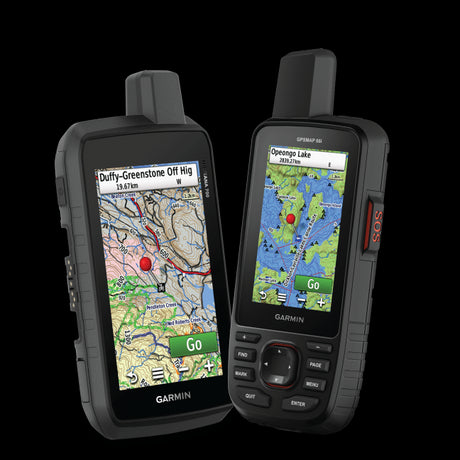
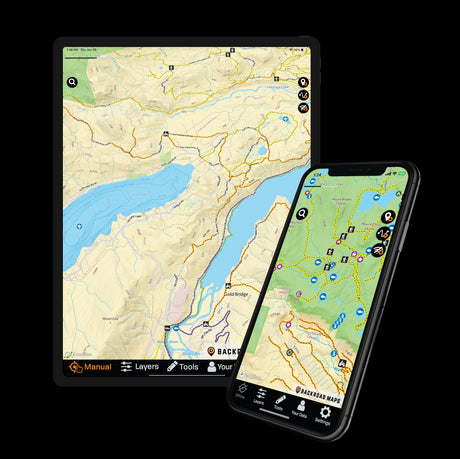
The road classification layer in the BRMB Maps app is what separates a maintained forest road from an overgrown logging spur, which matters twice over for grouse: it tells you what your truck can handle, and old spurs into cutblocks are exactly where the birds are. Overlay it with the Crown land layer and you know whether the block is open to you.
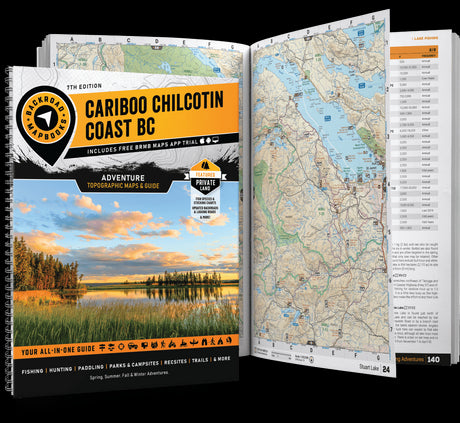
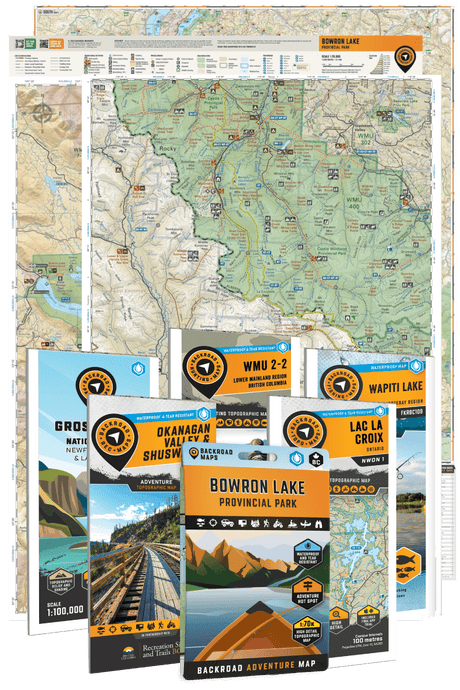
Scout the road network and Crown land on BRMB's Ontario layers before you leave. For paper, the Northwestern Ontario Backroad Mapbook covers the strongest grouse country in the province, and the hunting TOPO series includes per unit sheets. Offline download is a PRO feature and worth it, since most of these roads have no service.
The road rule, and the orange rule
This is the section to actually read twice, because these are the two rules that catch grouse hunters most often.
First, roads. "You must not shoot from or across a right of way for public vehicular traffic anywhere in Ontario." And the definition is far broader than a highway: "A right of way for public vehicular traffic includes a road or trail open to public use by vehicle traffic" (general regulations). A logging road is a right of way. A bush trail open to ATVs is a right of way. So the classic road-hunting flush, bird on the trail, gun up, is not legal anywhere in the province. Step off, turn away from the road, then shoot.
On top of that, possessing a loaded firearm "on or within 8 metres of the travelled portion of a right of way for public vehicular traffic" is prohibited in most of southern Ontario, and in large parts of Central and Northwestern Ontario during an open gun season for deer or elk.
Second, hunter orange. It applies to you: "All licensed hunters, including bow hunters, falconers, wild turkey hunters, bear hunters and trappers who are hunting under their Trapping Licence, during a gun season for deer, elk or moose, are required to wear hunter orange." The exemption covers migratory game birds and cormorants, not grouse. The garment "must cover a minimum of 400 square inches (2,580 square centimetres) above the waist and be visible from all sides", plus a hunter orange head cover. Since gun deer seasons overlap the best grouse weeks in much of the province, plan on wearing it.
The rest of the list, briefly:
- "It is illegal to have a loaded firearm in or on a vehicle, including all-terrain vehicles and snowmobiles." Exception: "A loaded firearm may be carried in, and discharged from, a canoe or boat that is being paddled, with no motor attached."
- No vehicles or boats may be used "for chasing, pursuing, harassing, capturing, injuring or killing any wildlife." Drones are prohibited while hunting, including searching for a wounded bird.
- Firearms must be unloaded and encased from 30 minutes after sunset to 30 minutes before sunrise.
- Air and pellet guns are legal for small game. In 20 named southern jurisdictions you may not use a rifle larger than .275 calibre for small game.
- Careless handling carries "a fine of up to $25,000 or imprisonment for up to 2 years, or both."
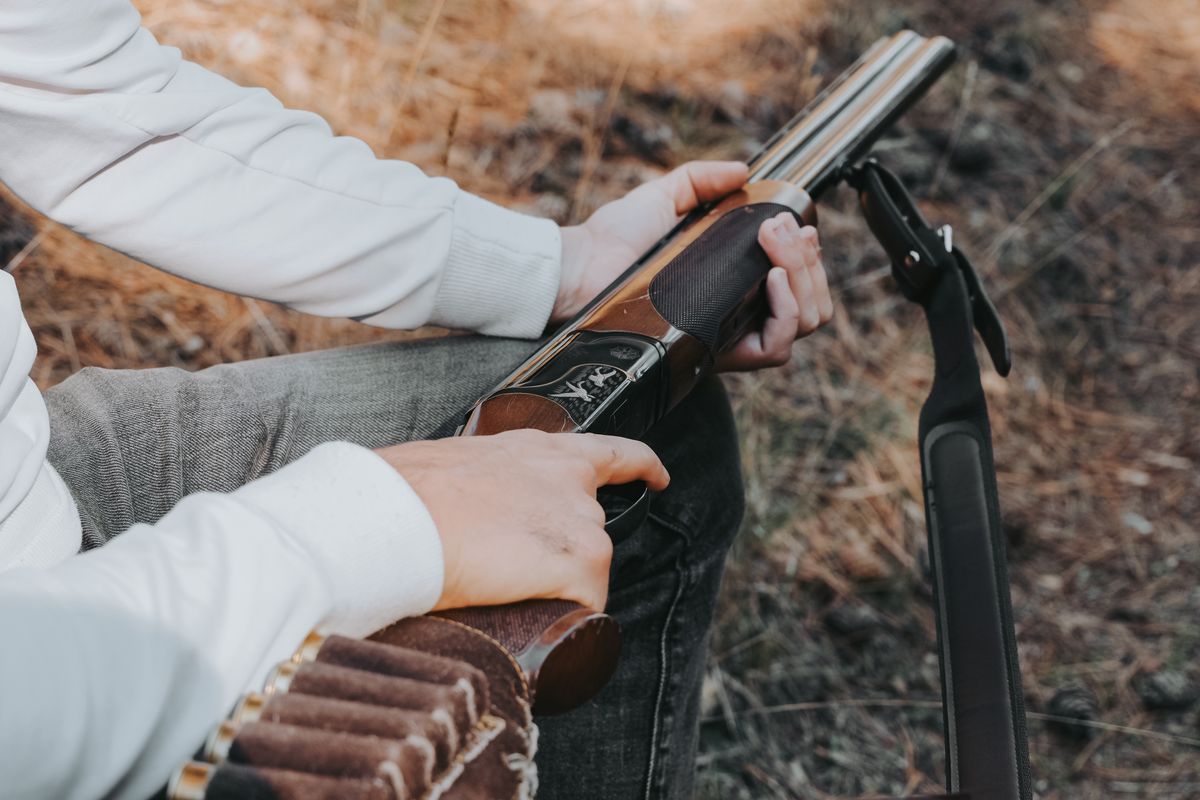
Land access, parks and camping
Crown land is the default and it is enormous. Ontario is over 107.6 million hectares and Crown land represents 87 percent of it. The Crown Land Use Policy Atlas alone covers more than 39 million hectares of land and water. Hunting is permitted in at least part of 428 of Ontario's 635 provincial parks and conservation reserves, about 67 percent, though you should check with the park office for species and season restrictions. Crown Game Preserves are closed to hunting outright and you may not even possess a firearm in one unless you live on private land inside it.
ATVs are allowed: "You can use your ATV or off-road vehicle on Crown land if the land is not restricted and you follow applicable municipal bylaws and legislation."
On private land, notice can be given "verbally, by signs, symbols (for example, a red circle 10 cm in diameter), coloured markings or fences", and land under cultivation counts as notice by itself. The line worth memorising: "Unsigned lands may be private land as well... If unsure, stay out." A wounded bird that crosses onto posted land requires permission to retrieve. And you may not enter private land in a party of more than 12 with a hunting device without express permission. Note that Ontario's written permission form requirement applies to elk, moose in WMU 65 and deer in WMUs 43A, 43B and 44, not to grouse.
Camping the trip is straightforward for residents: up to 21 days on any one site in a calendar year, then move at least 100 metres. Non-residents need a Crown land camping permit at $10.57 per person per night, and there is a restriction that lands squarely in grouse season: non-resident Crown land camping is banned within 1 km of five named road systems in the Kenora and Fort Frances Districts between October 1 and November 15. Our guide to free Crown land camping in Ontario covers the rest.
FAQ
Do you need a tag to hunt grouse in Ontario?
No. Grouse requires no tag and no draw. You need an Outdoors Card, a small game licence and proof of firearm accreditation if hunting with a gun. Tags in Ontario apply to wild turkey and to wolf and coyote in select WMUs.
When does grouse season open in Ontario in 2026?
September 15 in the northern and near-north WMUs, and September 25 in the southern units. WMUs 1 to 4, 16 to 18 and 24 to 27 run through to March 31, while most other units close December 31.
What is the daily limit for ruffed grouse in Ontario?
Five, with a possession limit of 15, through most of the province. In WMUs 69A, 70 to 72, 77 to 81 and 85 to 95 the daily limit is 2 with a possession limit of 6. The limit of 3 you may see quoted is the separate falconry limit.
Can you shoot a grouse on a logging road in Ontario?
No. You must not shoot from or across a right of way for public vehicular traffic anywhere in Ontario, and the definition includes any road or trail open to public vehicle use. Step off the road and turn away from it before shooting.
What habitat should I look for?
Young poplar and aspen regeneration, roughly 5 to 20 years old, thick with stems, ideally beside older aspen. Minnesota DNR identifies young aspen 6 to 25 years old for nesting and food, dense sapling aspen 4 to 15 years old for brood cover, and mature aspen over 25 years old with a hazel or ironwood understory.
Wrap up
Grouse is the season you can decide to do on a Friday. No draw, no tag, no allocation, a licence under $32, and legal ground across most of the province. What separates a good day from a long walk is habitat and access: young poplar you can reach on a road your truck can handle, on land you are allowed to be on.
Do that part on a map before you drive four hours. Find the cutovers, check the road class, confirm the Crown land boundary, and remember the right of way rule when a bird flushes down the trail in front of you. Scout roads, terrain and Crown land on BRMB Maps, then download the area for offline use, a PRO feature, because the good covers are past the last bar of signal. Start planning on the BRMB Maps Explore Canada hub.