Summary: Moose hunting in Alberta in 2026 runs on a draw. Every general moose season in the province requires a special licence obtained through the hunting draws, and the antlered draw put out 8,817 licences against 75,562 applicants, roughly a 10 percent chance. The exception is archery. Several archery only seasons need no draw at all, and most hunters do not know they exist. Here is how the draw works, what the province's own harvest and survey numbers say about where the moose actually are, and the road and access rules that end more hunts than bad luck does.
There are two kinds of moose hunter in Alberta. The ones who applied in June, and the ones who found out in September that they cannot legally shoot a bull with a rifle.
Backroad Maps has charted this province for more than 30 years, and the single most common mistake we see is a hunter loading up for a general season that does not exist. In 2026 there is no over the counter rifle moose licence in Alberta. Not in the boreal, not in the foothills, not anywhere. The draws booklet lists general non draw licence seasons for white-tailed deer, mule deer, elk, sheep, black bear and cougar. Moose is not on that list.
That sounds like bad news. It is not, entirely. There is a real season open right now that most people miss, the harvest data tells you exactly which units produce, and the priority system rewards patience if you understand what it actually tracks.
"Priority 1 may be enough to get a licence in WMUs where few hunters apply, but priority 5 may be required to get drawn in a more popular unit with a lower quota." (2026 Alberta Hunting Draws)
Key takeaways
- All general moose seasons in Alberta in 2026 require a draw obtained special licence. There is no over the counter rifle moose tag.
- Archery only moose seasons are the exception and need no draw. A resident moose (archery) licence costs $50, and some units open as early as August 25.
- The 2025 antlered moose draw offered 8,817 licences to 75,562 applicants, about 10 percent drawn. Antlerless was 17 percent and calf was 21 percent.
- Resident hunters took an estimated 6,326 moose in Alberta in 2025, and hunter success by WMU ranges from 79 percent down to zero.
- You may hold only one moose licence, and you may apply in only one of the three moose draws in a given year.
How the 2026 season is actually structured
Every general moose season in Alberta is a special licence season. In the season tables, a small black box marks the seasons that require one, and "Indicates seasons that apply only to hunters with applicable special licences" appears against every moose entry across all five WMU series, from the Prairie 100s to the Northern Boreal 500s (2026 Alberta Guide to Hunting Regulations).
There are three draw codes and you pick one. Code 33 is antlered moose, code 27 is antlerless, code 28 is calf, and a calf is defined as a moose under 12 months. The regulations are blunt about the limit: "Residents may apply in only one of the following moose draws" and "A hunter may possess only one moose licence" (2026 Alberta Hunting Draws).
Season lengths vary hard by unit. Mountain WMUs 400 and 402 run September 17 to November 30. The foothills block of 300, 302, 303, 304, 306 and 308 does not open to rifle until October 25. A large block spanning the Prairie, Parkland and Foothills, including 200 through 260, is November only. Boreal units 531, 532, 534, 539 and 540 run a full September 1 to November 30.
Some units are split season draws, meaning you choose one window when you apply. WMUs 511, 512, 514 to 520, 524, 525, 528 to 530, 536, 541, 542 and 544 offer either September 1 to October 31 or November 1 to November 30. Pick wrong for the rut and you have picked wrong for the year.
What you can still hunt without a draw
The archery seasons are open to anyone with a moose (archery) licence, no draw required, and this is the part worth reading twice. The resident licence is $50 and the archery windows are real:
- Antlered, August 25 to August 31, in WMUs 511, 512, 514 to 520, 524, 525, 528 to 532, 534, 536, 539 to 542 and 544.
- Antlered, August 25 to September 23, in WMUs 347, 349 to 351, 354, 356 to 360, 412, 414, 416 to 422, 426 to 446, 521 to 523, 526, 527, 535 and 537.
- Antlered and antlerless, September 1 to November 30, in WMUs 212, 247 and 248. Note that rifles and shotguns are prohibited outright in 212, 247, 248 and 410.
- Antlered and antlerless, August 25 to September 23, in WMUs 352, 353 and 355.
That August 25 opener lands squarely before the rut in some of the highest density moose country in the province. If you missed the June draw deadline, this is your season. A bowhunting permit costs an extra $10 and is not required for a crossbow.
One trap: Sunday big game hunting is prohibited in WMUs 102 to 160 and in 624, 728, 730 and 936. Plan the weekend accordingly.
The draw: dates, cost and how priority really works
The 2026 cycle ran June 2 to June 25, results posted July 14, and big game licences went on sale August 4. Each application costs $6 and is non refundable, and that levy goes to the Alberta Conservation Association. You need a valid 10 digit WiN and a wildlife certificate before you can apply. The certificate is $35 and WiN activation is $8.
Priority is the part people misunderstand. It rises every year you apply and are not drawn, and it drops to zero the year you are drawn. Years you skip do not build priority. Critically, priority attaches to the draw code, not the unit: "if you have priority 3 for the antlered moose special licence draw, that will be your priority for that licence in whichever WMU or season you apply." So you can move units freely without losing what you have banked.
The published odds are the honest reality check. From the 2025 season:
- Antlered moose, code 33: 8,817 licences, 75,562 applicants, 10 percent drawn.
- Antlerless moose, code 27: 3,951 licences, 22,468 applicants, 17 percent drawn.
- Calf moose, code 28: 336 licences, 1,533 applicants, 21 percent drawn.
Two changes worth knowing for 2026. Non resident antlered moose draw applications are no longer accepted, so that route is outfitter allocation only. And the minimum age to hunt big game and to apply on draws is now 10.
Fees on the licences themselves: antlered special licence $65, antlerless $50, calf $50, and a partner licence $12. A resident antlered holder may designate one resident partner to share the tag.
Where the moose actually are
Alberta does not publish a provincial moose population estimate, so ignore anyone who quotes one. What the province does publish is per unit harvest with estimated hunter success, and per unit aerial surveys. That is better data anyway, because it tells you about hunting rather than about biology.
Resident hunters took an estimated 6,326 moose in 2025: 4,138 male, 1,764 female and 414 young (Alberta moose hunter harvest report). The top producing units, with estimated success:
- WMU 526, Peace Country: 199 moose, 49 percent success.
- WMU 357: 190 moose, 33 percent.
- WMU 250: 175 moose, 58 percent.
- WMU 234: 170 moose, 56 percent.
- WMU 354: 152 moose, 47 percent.
- WMU 166: 119 moose at 79 percent, the highest success rate in the province.
The mountains are the opposite story. WMU 404 gave up six moose at 15 percent success, 412 gave up five, 414 gave up two, and 408 and 410 produced none at all. Beautiful country, very few moose.
WMU 526 is the best documented unit in the province. A February 2023 aerial survey estimated 4,644 moose across 7,104 square kilometres, a density of 0.65 moose per square kilometre, up 39.4 percent since the 2015-16 survey. The province describes it as "an area with high hunting interest, particularly for moose" (2023 aerial survey, WMU 526).
Here is a detail almost nobody explains. WMU 353 holds an estimated 2,614 moose at 0.57 per square kilometre, and there is a significant antlerless draw in its western portion. The reason is written into the survey report: "It is important to manage overabundant moose densities in the Little Smoky and A La Peche caribou ranges where predator control has reduced natural moose mortality." That is a management driven opportunity, not an accident, and it is why antlerless odds beat antlered odds by a wide margin.
Read the map before you burn the tag
A drawn tag is worth about as much as your ability to get to the animal and know whose land you are standing on. WMU boundaries are legally defined in the Wildlife Regulation, and the province warns that the boundaries on its website are "small-scale approximations of the actual units legally described" (Alberta Wildlife Management Units). Cross a line you cannot see and your tag is invalid.

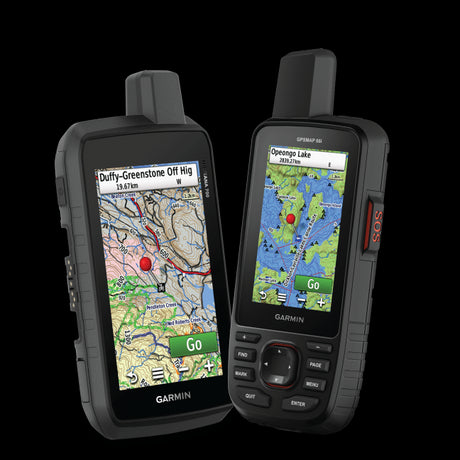
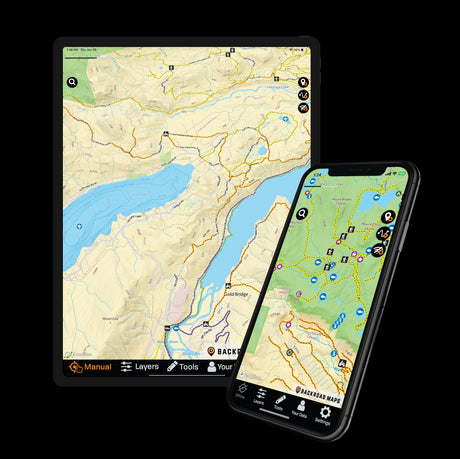
The hunting areas layer in the BRMB Maps app puts WMU boundaries on top of the road network and the Crown land layer, with your GPS position on the same screen. That combination is the whole job: which unit, which road class, whose land. Offline download is a PRO feature, and you will want it, because most of these units have no cell service.
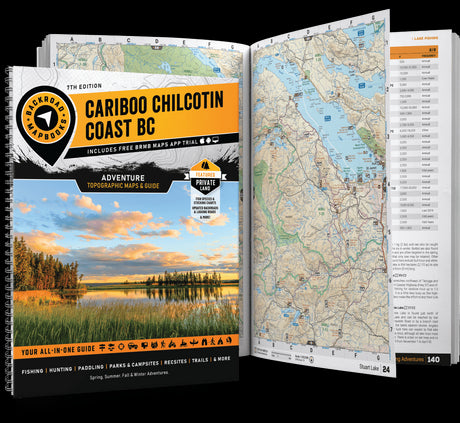
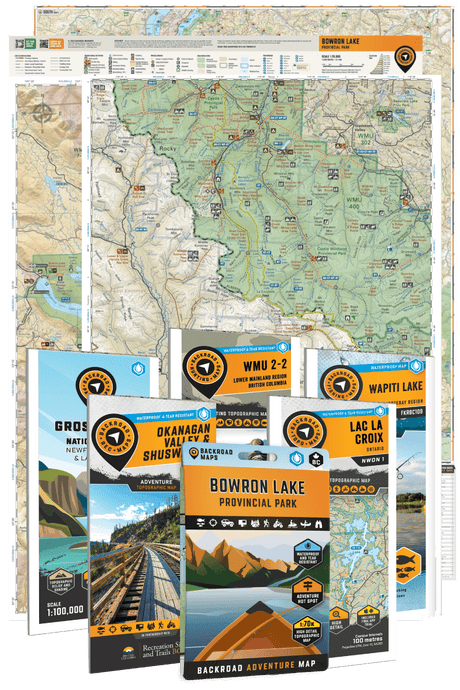
Scout access before you leave the highway on BRMB's Alberta layers. For a paper backup that does not need a battery, the Alberta Backroad Mapbook bundle covers the province, and the Backroad hunting TOPO series includes per unit sheets.
Roads, OHVs and the rules that end hunts
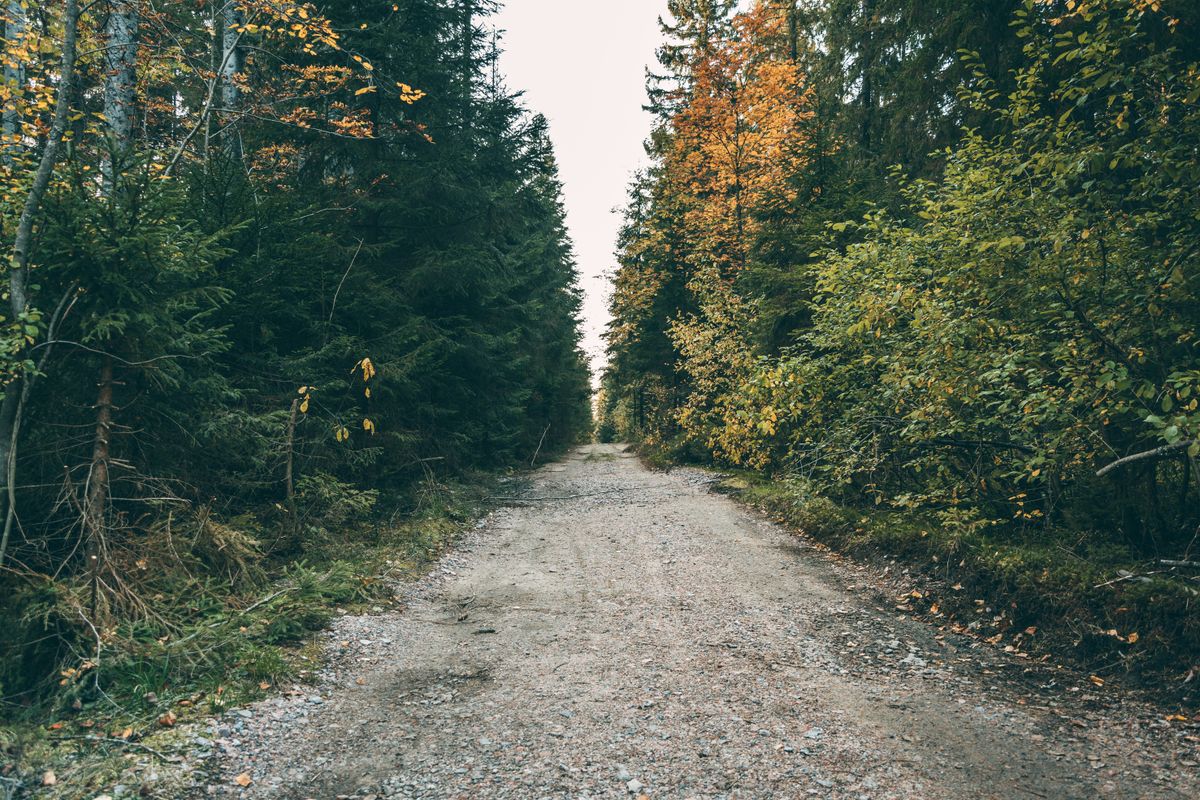
The road rules catch more hunters than any season date. It is unlawful to discharge a firearm from, along or across a provincial highway or "a road that is paved, oiled, graded or regularly maintained." The same rule extends to arrows from a bow or crossbow. And read this line carefully: "if there is no identifiable ditch or fence to mark the outside edge of the roadway, then the roadway extends 20 feet from the edge of the traveled portion."
Also unlawful: a loaded firearm in or on a vehicle, discharging within 183 metres of an occupied building without permission, and hunting from half an hour after sunset to half an hour before sunrise.
Off highway vehicles must be registered, insured and plated, with a headlight, tail light, muffler and spark arrestor. In the mountain units 400 to 446 there is a rule that surprises people every year: you may not carry a weapon on an OHV from one hour before sunrise until noon during an open big game season on public land, and it applies to bird hunters too. Some Public Land Use Zones go further and require you to stay on designated trails "even when retrieving game."
On private land, permission is not optional. The province states plainly that hunting private land without permission "results in the prosecution of more than 200 hunters each year." Leased public land under grazing or cultivation needs the leaseholder's permission as well, and from a gravel road you cannot tell leased from open.
Camping, and what you owe after the kill
If you are camping in the Eastern Slopes, anyone 18 and older needs a Public Lands Camping Pass to random camp, and it is required year round from Grande Prairie to Waterton Lakes National Park. It costs $20 per person for three days or $30 per person annually, plus a processing fee, and it is sold per person rather than per vehicle. Outfitter clients are not exempt: "Hunters that are clients of commercial outfitters do require a camping pass" (Public Lands Camping Pass).
Random camping rules: 14 days maximum in one spot, then move at least 1 km for 72 hours, camp at least 30 metres from lakes and streams and 100 metres from oil and gas facilities (camping on public land).
After the season, reporting is mandatory on every special licence you bought, whether or not you hunted. Reports are due February 15, or March 15 for seasons ending after February 15, and missing the deadline adds a $15 surcharge before you can buy a wildlife certificate or enter the draw again. Complete it and you are entered for a chance at a bonus special licence.
One clarification worth having: mandatory CWD head submission in 2026 applies to deer, not moose. Alberta has tested over 124,000 heads since 1998 and found CWD in 29 moose, so it is rare but not absent. If you take a calf under a calf licence, the head must stay with the carcass, and antlered animals must not be tagged around the antler.
FAQ
Can you hunt moose in Alberta without a draw?
Yes, but only with a bow. All general moose seasons require a draw obtained special licence in 2026, while archery only seasons are open to anyone holding a resident moose (archery) licence at $50. Some archery seasons open as early as August 25.
What are the odds of drawing a moose tag in Alberta?
In the 2025 draw, the antlered moose draw offered 8,817 licences to 75,562 applicants, about 10 percent drawn. Antlerless was 17 percent and calf was 21 percent. Per unit odds are not published, so treat those as province wide averages.
Which WMU is best for moose in Alberta?
By 2025 harvest, WMU 526 in the Peace led with 199 moose at 49 percent success, followed by 357, 250, 234 and 354. WMU 166 had the highest success rate at 79 percent. The mountain units are the weakest, with 408 and 410 producing no moose in 2025.
How much does moose hunting in Alberta cost a resident?
A wildlife certificate is $35, a draw application is $6, and the antlered special licence is $65. The non draw archery licence is $50, with a $10 bowhunting permit if you use a bow rather than a crossbow. WiN activation is a one time $8.
Do I need to report my moose hunt in Alberta?
Yes. Harvest and effort reporting is mandatory on all special licences purchased, due February 15, or March 15 for seasons ending after February 15. Failing to report adds a $15 fee before you can buy a certificate or apply again.
Wrap up
Alberta rewards hunters who read the fine print. Apply in June, apply every year so your priority keeps climbing, and pick the unit on harvest data rather than on reputation. If you missed the draw, the archery seasons are open and legitimate, and the August openers put you in good country before the pressure arrives.
The rest is access. Know which unit you are in, know which road you are on, and know whose land you are standing on before you pull the trigger. Scout the WMU boundaries, road classes and Crown land layers on BRMB Maps, then download them for offline use, a PRO feature, so the boundaries are still on screen where there is no signal. Start planning on the BRMB Maps Explore Canada hub.