Summary: Elk hunting in British Columbia runs on two tracks. In the Kootenay and the Peace there is a general open season, but almost all of it is restricted to six point bulls, meaning a bull with at least six tines on one antler. Everywhere else, and for every antlerless elk, you need a Limited Entry Hunting authorization from the draw. The Peace holds the province's largest elk population and produced 1,844 resident kills in 2023. The Kootenay absorbed 83,223 hunter days for 850. Here is how to read that difference, and the access rules that matter more than either number.
Six tines on one antler. That is the sentence the whole general season turns on.
Backroad Maps has mapped this province for more than 30 years, and BC elk is the file where hunters most often arrive with the right gear in the wrong place. The province holds an estimated 35,000 to 71,500 elk, but they are not spread evenly and the regulations are not written evenly either. The Kootenay is where everybody goes. The Peace is where the bulls come from. Vancouver Island has Roosevelt elk and a draw so tight the odds run past 100 to 1.
Get the region right, get the antler rule right, then get down the road. That order matters, and this guide follows it.
"We encourage hunters to continue hunting in the affected areas; hunting can help to suppress transmission and spread by removing infected animals from the landscape." (Region 4 Kootenay Hunting and Trapping Regulations Synopsis, on chronic wasting disease)
Key takeaways
- BC has nine administrative hunting regions, because Region 7 splits into 7A Omineca and 7B Peace. Each region contains many Management Units, written as region dash unit, such as MU 4-20.
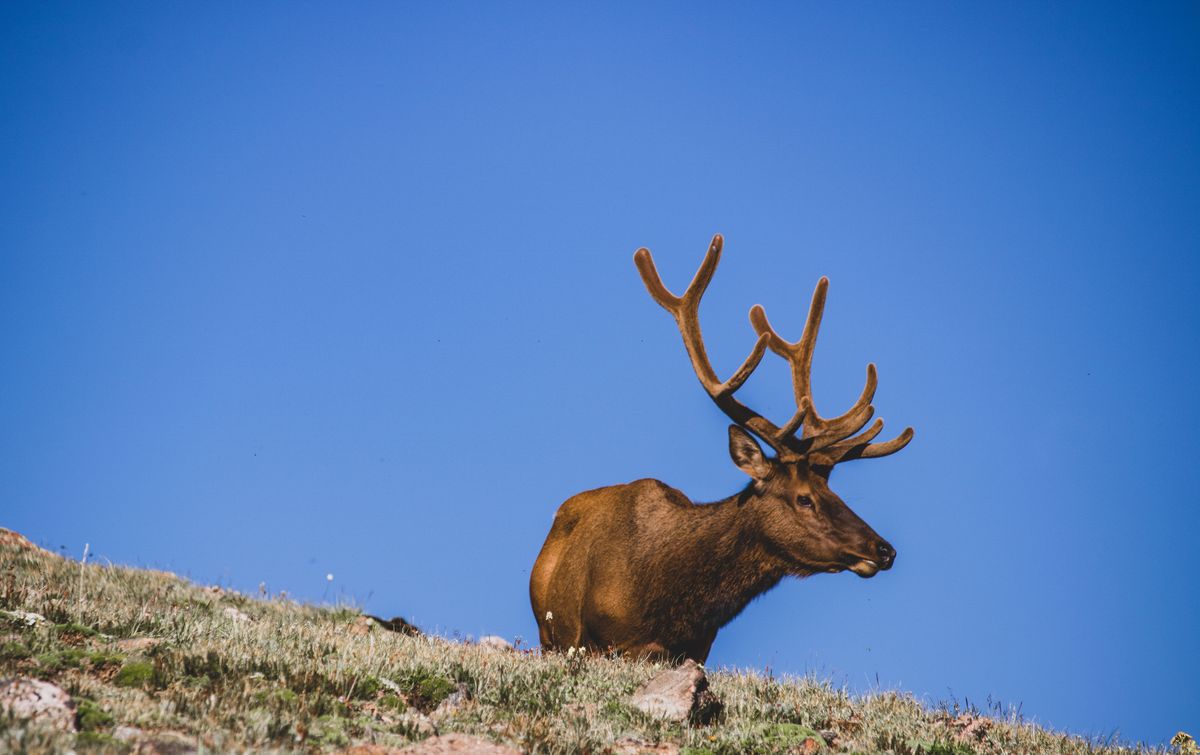
- The general elk season in the Kootenay and Peace is mostly six point bulls only. A six point bull "means any bull having at least six tines on one antler" and a tine must be at least 2.5 cm long.
- Region 7B Peace holds an estimated 15,000 to 35,000 elk, trending stable to increasing, and delivered 1,844 resident kills in 2023. Region 4 Kootenay holds 10,000 to 20,000 and is declining to stable.
- Vancouver Island Roosevelt elk is limited entry only, with as few as two authorizations on some hunts and 2025 first choice odds as long as 106 to 1.
- Every elk species licence now carries a Mandatory Hunter Report due March 31. Miss it and you cannot buy a licence or apply for the draw.
How the region and MU system works
British Columbia is divided into eight numbered regions, but nine administratively, because Region 7 is split into 7A Omineca and 7B Peace. Inside each region sit dozens of Management Units, and those MUs are further divided into lettered Zones to create discrete draw areas. Region 4 Kootenay runs MUs 4-1 to 4-9 and 4-14 to 4-40. Region 7B runs 7-19 to 7-22, 7-31 to 7-36 and 7-42 to 7-58 (BC Hunting and Trapping Regulations Synopsis).
Seasons are set per MU. The synopsis puts it plainly: "To define open seasons the province is divided into Management Units. Hunting seasons are shown in regional schedules on the following pages. All season dates are inclusive." There is no province wide elk season, and there is no province wide antler rule either.
Kootenay: the general season everyone hunts
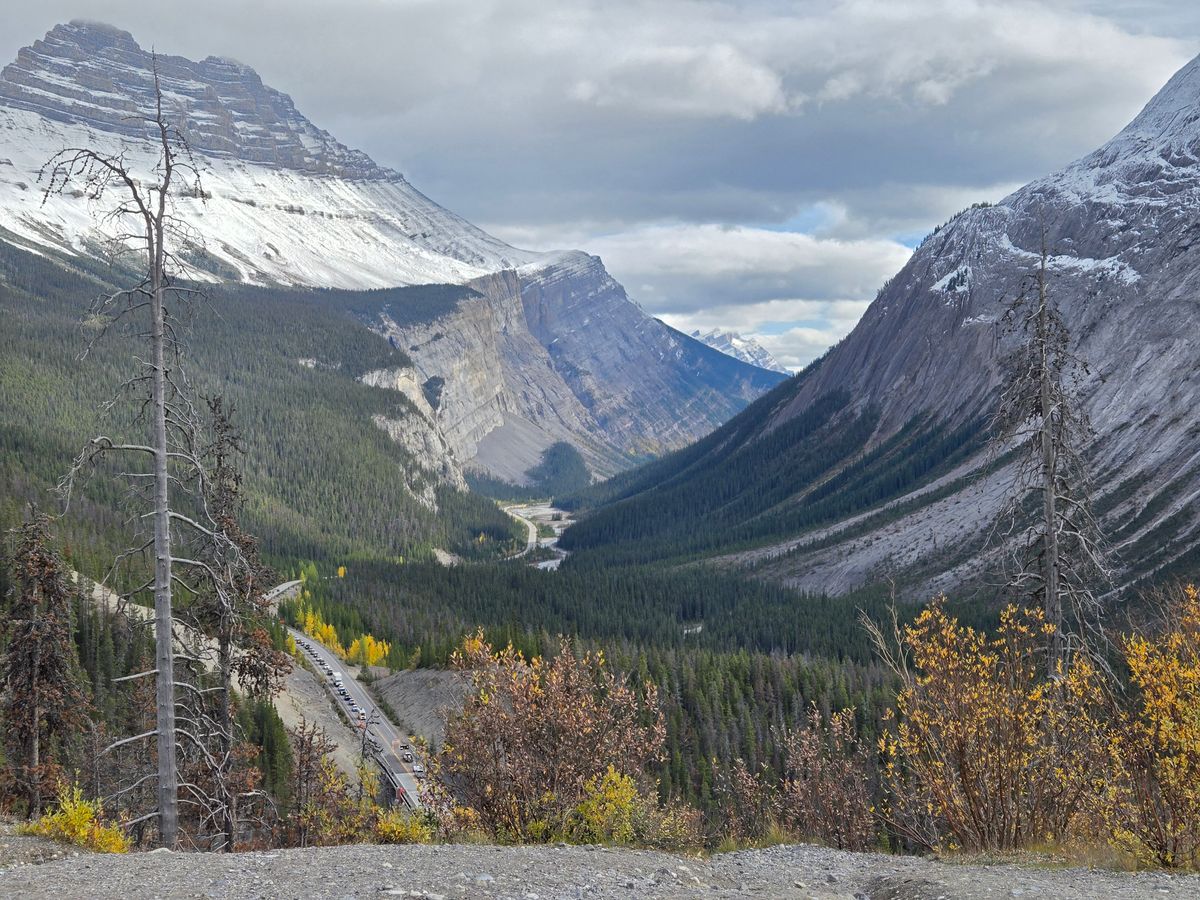
Region 4 is the busiest elk region in BC, and it is a pure general open season. There is no elk draw in the Kootenay at all. What there is instead is the six point restriction, and it is unforgiving.
Season dates from the Region 4 schedule (Region 4 synopsis):
- Six point bulls, September 10 to October 20, in MUs 4-1 to 4-7, 4-20 to 4-26, 4-34 to 4-36 and 4-40.
- Six point bulls, September 10 to October 5, in MUs 4-8, 4-9, 4-14 to 4-19, 4-27 to 4-33, 4-37 and 4-38.
- Bow only, September 1 to September 9, in MUs 4-1 to 4-7, 4-20 to 4-26, 4-34 to 4-36 and 4-40: the season reads "Bulls", not six point bulls.
Read that last line again, because it is the single most valuable thing in this guide. In that first block of MUs, the nine day archery window carries a materially looser antler restriction than the rifle season that follows it in exactly the same units. Any legal bull, not just a six point. That is nine days where a five point raghorn is a legal animal and a rifle hunter arriving on September 10 has to pass him.
Regional bag limit is one elk, and "Antlers must accompany the species licence."
The Kootenay's problem is pressure. In 2023 it drew 6,994 resident elk hunters and 83,223 hunter days, more than any region in the province, and produced 850 resident kills. Work that out and it is roughly 12 percent success across an enormous amount of effort. The six point rule is doing exactly what it was designed to do.
The Peace: fewer hunters, more elk, longer seasons
Region 7B is where the numbers flip. The 2022 provincial ungulate estimate puts the Peace at 15,000 to 35,000 elk with a trend of stable to increasing, the largest elk population in BC (2022 ungulate population estimates). In 2023 it recorded 5,666 resident hunters, 51,418 hunter days and 1,844 kills, more than double the Kootenay's harvest on 40 percent less effort.
Season dates from the Region 7B schedule (Region 7B synopsis):
- MUs 7-42 southern portion and 7-57: six point bulls, August 15 to October 31. The earliest and longest general elk opening in the province.
- MUs 7-42 northern portion, 7-49 and 7-50: three point bulls, August 15 to September 9, then six point bulls September 10 to October 31.
- MUs 7-20, 7-21, 7-32 to 7-35, 7-43 to 7-46 and 7-58: three point bulls, September 1 to October 31.
- Antlerless, September 15 to October 15, across a listed group including 7-20, 7-21, 7-32 to 7-35, 7-43 to 7-46, 7-49 and 7-58.
The three point MUs are the under used opportunity here. A three point bull "means a bull having at least three tines on one antler," and an August 15 opener on a three point restriction is a genuinely achievable general season hunt.
Limited Entry Hunting: the real odds
Everything else runs through the draw. The 2026 application deadline was 11:59 pm on June 23, 2026, and the fall draw has already been run, so results are in your WILD account (Limited Entry Hunting). An application costs $6.30 and is not refundable. A successful applicant pays nothing extra for the authorization but still needs a hunting licence and an elk species licence.
Three rules shape your strategy. You may only enter one application per LEH species per draw. If you were drawn for a species last year, your chance is cut by 50 percent, and for moose and certain elk regions the reduction rises to 66 percent for anyone drawn within three years. And group hunt applications are not accepted for elk in Regions 1 and 2.
What the odds actually look like on Vancouver Island, from the LEH synopsis (LEH synopsis):
- Hunt 2002, MU 1-04 Zone A, September 1 to October 10, either sex, archery only: 2 authorizations, 106.0 to 1.
- Hunt 2005, MU 1-04 Zone A, December 15 to January 10, either sex, archery only: 4 authorizations, 23.3 to 1.
- Hunt 2011, MU 1-03 Zone B, December 1 to 15, antlerless: 3 authorizations, 49.0 to 1.
- Hunt 2015, MU 1-09 Zone A, December 1 to 15, antlerless: 7 authorizations, 30.4 to 1.
Compare the Peace. Hunt 2213, Tuchodi River, MU 7-42 Zone A, August 20 to October 31, antlerless: 101 authorizations at 1.6 to 1. Hunt 2214, Peace River, MU 7-45, December 1 to February 28: 40 authorizations at 4.3 to 1. If your goal is an elk in the freezer rather than a Roosevelt bull, the arithmetic is not subtle.
Two caveats the synopsis states itself: the authorization counts are labelled tentative for 2026, and the odds column is 2025 first choice odds, so it is last year's actual result rather than this year's forecast.
Licences, fees and the report you now owe
A BC resident hunting licence to hunt all game is $32, made up of a $25 fee and a $7 conservation surcharge that goes to the Habitat Conservation Trust Foundation. The elk species licence is $25 for residents and $250 for non residents. A Fish and Wildlife ID is mandatory and free, and residents must prove BC residency every three years. All licences expire March 31.
Here is the change that catches people. Province wide for 2026 to 2028: "Mandatory Hunter Report required under all elk species licences." The requirement reads "All individuals who purchase an elk, moose or caribou species licence are required to submit a report on their hunting activity by March 31," and the penalty is hard: "Hunters who fail to submit a required Mandatory Hunter Report commit an offence and will not be able to purchase a licence or LEH application."
One thing to get right, because plenty of websites get it wrong: elk in BC do not require compulsory inspection. That list covers mountain goat, mountain sheep, caribou, cougar and black bear in MUs 6-12 and 6-13. What elk carries is the Mandatory Hunter Report, plus mandatory CWD head submission inside the Kootenay CWD Management Zone.
The CWD zone in the Kootenay
The CWD Management Zone covers MUs 4-1 to 4-8 and 4-20 to 4-25, which is the heart of the Kootenay general season. The province estimates that "less than 1% of cervids currently have CWD in these areas."
Inside the zone, testing is mandatory: "Mandatory testing is expanded to include deer, elk and moose harvested within the CWD Management Zone and samples must be submitted to a designated freezer before leaving this area." And there is a transport restriction that will change how you break down an animal: brain tissue and spinal column, except the tail, cannot leave the zone. A 24 hour exemption applies on specified routes for animals taken in MUs 4-7, 4-8 and 4-25.
Plan the freezer stop before you plan the pack out. Locations are listed at gov.bc.ca/CWDdropoff.
Forest service roads: the part that decides your hunt
BC has approximately 58,000 kilometres of forest service roads, part of a 620,000 kilometre resource road system, according to the Office of the Auditor General (OAG report, 2021). That network is how you reach elk, and it is also the biggest hazard in this entire activity.
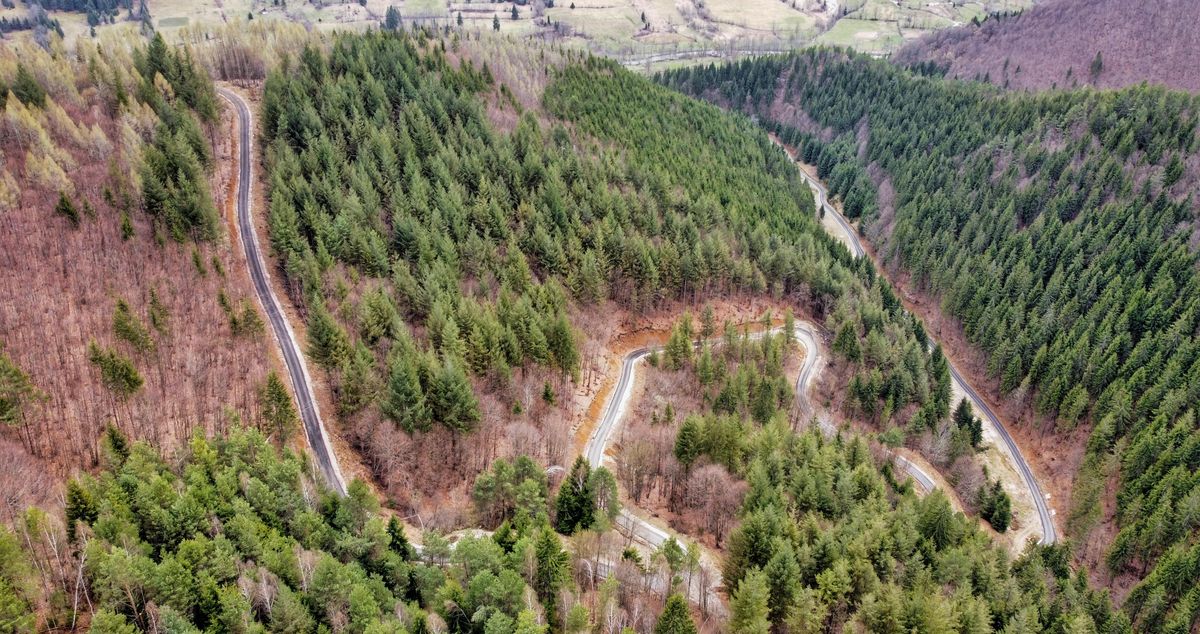
Radio protocol matters. There are 35 road channels and 5 loading channels in the standard bank, and most resource roads are "radio assisted", meaning radio use is not mandatory. But "Where posted, road users using mobile radios must use the posted channels and call protocols", and a federal licence is required to transmit. The province also warns that "not all resource roads have adopted the protocols and standard bank of resource road radio channels" (resource road radio communications). If you ride an ATV on an FSR you need a valid driver's licence and a minimum of $200,000 third party liability insurance.
Then there are the closures, and there are two distinct kinds. A Motor Vehicle Closed Area prohibits vehicle use outright. A Motor Vehicle for Hunting Closed Area prohibits using a vehicle to hunt, to transport wildlife, to move hunting equipment, or to move hunters to and from wildlife. Both can be seasonal or year round, both can be specific to ATVs, e-bikes or snowmobiles, and unless exempted, both include private land. One line is worth memorising: "Where there are inconsistencies with signs and the regulation, the regulation is the final authority."
Road allowance rules apply on top. It is unlawful to discharge a firearm across, or to discharge a firearm or hunt within, the road allowances of all numbered highways and any two lane roads. On listed major routes including the Coquihalla between Hope and Merritt, Highway 3 through Manning Park, the Okanagan Connector and the Sea to Sky, single projectile discharge is banned within 400 metres of the road allowance on either side, while shotgun with shot only is permitted.
Know the road class and the boundary before you commit
A closed area you did not know about, a grazing lease occupied by livestock, an MU line you crossed on a spur road. Those are the three ways a legal hunter becomes an illegal one in BC, and all three are map problems.

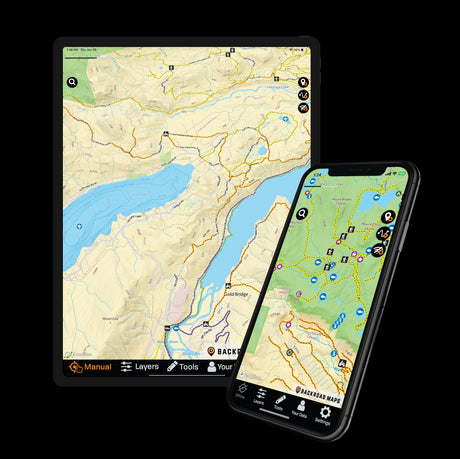
The road classification layer in the BRMB Maps app is the one that earns its keep here, because it distinguishes a maintained resource road from a deactivated logging spur before you commit a truck to it. Be aware of one honest limitation: in BC, BRMB carries a Private Land layer and road classification, not a full Crown land boundary layer, so confirm grazing leases against the regulations and the province's own closure map.
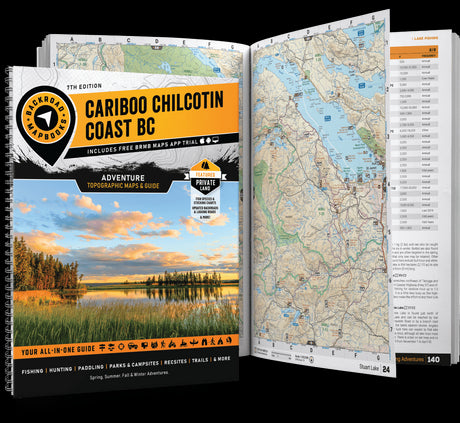
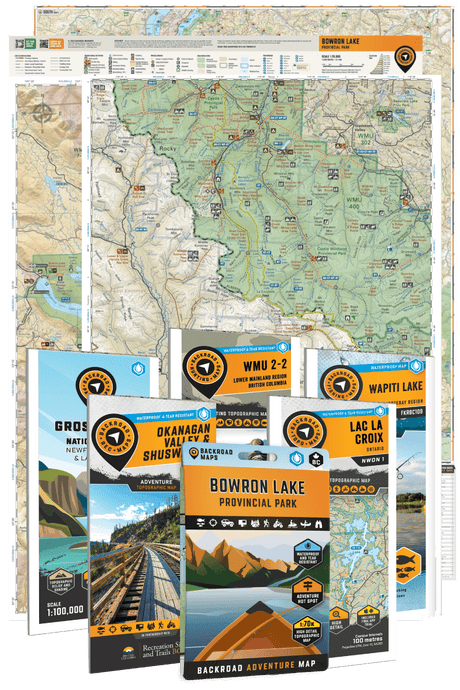
Plan the approach on BRMB's British Columbia layers, and carry paper for the day the battery dies. The British Columbia Mapbook bundle covers the province and the hunting TOPO series includes per MU sheets. If you are new to BC backroads, our guide to driving BC's forest service road network covers the vehicle side in detail.
One region to stop wasting time on
The Cariboo. Region 5 has no elk row in its season schedule at all, an estimated 350 to 500 elk, and in 2023 it recorded nine resident elk hunters and five kills. What the synopsis carries instead is a request: "The Cariboo Region is currently undertaking elk management planning and reports of elk observations will support this process. Please report Elk sightings to the FrontCounter BC Williams Lake Office at (250) 398-4574."
That is worth doing if you are out there, because the same page notes that "Elk are becoming more numerous and increasing their range in the Cariboo-Chilcotin." Today it is not a hunt. In ten years it might be.
FAQ
What is the six point rule for elk in BC?
A six point bull "means any bull having at least six tines on one antler," and a tine must be at least 2.5 cm long and longer than it is broad. Most of the Kootenay general season and much of the Peace season is restricted to six point bulls.
Do you need a draw to hunt elk in British Columbia?
Not always. The Kootenay and the Peace have general open seasons, mostly six point bull only. Vancouver Island, all antlerless elk, and most other regions require a Limited Entry Hunting authorization. The 2026 application deadline was June 23, 2026.
Which region in BC has the most elk?
Region 7B Peace, at an estimated 15,000 to 35,000 elk in 2022 with a stable to increasing trend. It also produced the most resident kills in 2023 at 1,844. Region 4 Kootenay holds 10,000 to 20,000 but is declining to stable and carries far more hunting pressure.
What does an elk licence cost in BC?
A resident hunting licence for all game is $32 and the elk species licence is $25. For non residents the elk species licence is $250. An LEH application is $6.30. A Fish and Wildlife ID is required and free.
Do elk need to be submitted for inspection in BC?
No. Elk are not on the compulsory inspection list. Every elk species licence holder must submit a Mandatory Hunter Report by March 31, and elk taken inside the Kootenay CWD Management Zone, MUs 4-1 to 4-8 and 4-20 to 4-25, must have a head sample submitted before leaving the zone.
Wrap up
The honest summary is this. If you want the best chance at an elk, look north to the Peace, where there are more animals, three point MUs, an August 15 opener and antlerless draws at better than 5 to 1. If you are set on the Kootenay, the September 1 to 9 bow only window in the first block of MUs is the best value in the regulations, because the antler restriction there is any legal bull. And whatever you do, submit the Mandatory Hunter Report by March 31, because it now gates your licence next year.
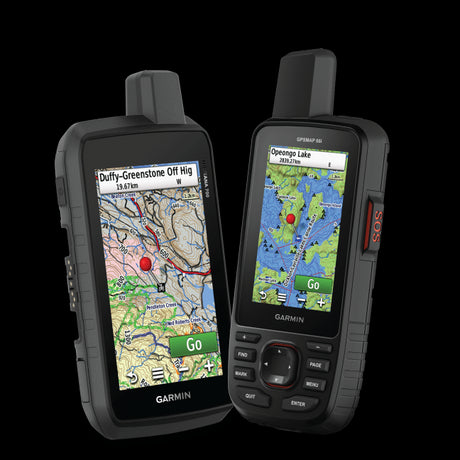
Then solve the road. Check the closure map, learn the posted radio channel, and know your road class before you commit the truck. Scout the roads, terrain and Private Land layers on BRMB Maps, then download them for offline use, a PRO feature, because most of these valleys have no signal at all. Start planning on the BRMB Maps Explore Canada hub.