
The Kamloops region is one of the best stillwater trout fisheries on earth, with hundreds of stocked lakes within a short drive. Here are the top lakes to fish this summer, how the fishing changes through the season, the chironomid game that makes this region famous, and how to find a lake with good access.
If you like catching rainbow trout, there are few better places on the planet than the lakes around Kamloops. The region sits on a high plateau pocked with hundreds of small lakes. Most are stocked. Many are within half an hour of town. Anglers travel from around the world for them, and the fish even have a name: Kamloops trout.
Here is the thing most visitors get wrong. They pick a famous lake, show up at noon in August, fish the middle of it, and catch nothing. The fish were there. They were just deep, or done feeding for the day.
Backroad Maps has charted this country for more than 30 years and supplies the maps that recreationists and search-and-rescue teams trust. So let us give you the version that actually fills a net: where to go, when the fishing turns on, and how to read these lakes.
The Kamloops region's lakes are stocked with Pennask, Blackwater, and Fraser Valley strains of rainbow trout. (Freshwater Fisheries Society of BC)
Key takeaways
- The Kamloops plateau is a world-class stillwater rainbow trout fishery, with hundreds of stocked lakes close to town.
- The Freshwater Fisheries Society of BC stocks local lakes with three strains: Pennask, Blackwater, and Fraser Valley. Each fights a little differently.
- Chironomid fishing is the signature technique here, and it is deadly from late spring into summer.
- Lac le Jeune, Stake, and Roche are the easy starting points. Tunkwa and Pennask are where the bigger fish live.
- In summer heat, fish early and late, or go deep. The midday middle of the lake is usually a waste of time.
- You need a BC freshwater licence, and the best lakes carry special regulations worth following.
Why Kamloops is trout country
These plateau lakes are cold, rich, and alkaline, which is the exact recipe for growing fast, hard-fighting rainbows. Bug life is everywhere. Trout here pack on weight quickly, which is why a small, unremarkable-looking lake can hand you a five-pound fish.
Most of the good water is stocked by the Freshwater Fisheries Society of BC, which raises three main strains of rainbow trout (Freshwater Fisheries Society of BC). Pennask is the acrobat, a bug-eater that comes out of the water when hooked. Blackwater grows big and pulls hard. Fraser Valley is the dependable all-rounder. Knowing which strain a lake holds tells you a lot about what kind of day you are in for.
How the fishing changes through the season
This is the part that separates the people who catch fish from the people who drive home skunked.
Spring. Right after ice-off, fish move shallow and feed hard in the warming margins. This is one of the two best windows of the year. Cover water, fish the shoals.
Early summer. The chironomid hatches fire up, and the fishing can be absurd. More on that below.
Midsummer. The surface warms and the trout drop to the cooler water below the thermocline. Now timing is everything. Fish dawn and dusk in the shallows, or fish deeper through the heat of the day. The classic mistake is fishing shallow, mid-lake, at noon, and blaming the lake.
Fall. As the water cools, the fish move back up and feed aggressively before winter. The second prime window. Big fish get caught in October.
The chironomid game

If you take one technique away from this guide, make it this one. Kamloops is the chironomid capital of North America.
Chironomids are tiny midge larvae, and their pupae are the main food source for these rainbows for much of the season (Freshwater Fisheries Society of BC). The bulk of the best fishing happens on pupae patterns in sizes 12 to 16, fished under an indicator, dead slow, right above the bottom or near the depth the fish are holding. It looks like doing nothing. It out-fishes almost everything else.
Tunkwa Lake is the poster child. Its giant chironomid hatches from July into August, producing some of the most famous stillwater fishing in the province.
The lakes are worth starting with

Lac le Jeune
About 25 minutes southwest of town, Lac le Jeune is the easy, reliable choice. Well stocked with rainbows, with a fishing dock at Lac le Jeune Provincial Park, so it works for shore anglers and boats alike (Tourism Kamloops). A good first stop and a good family lake.
Stake Lake
Twenty kilometers south of Kamloops on Lac le Jeune Road, Stake Lake is a year-round favorite stocked with rainbows. Dock, toilets, and a rustic boat launch. Easy in, easy out.
Roche Lake
About 35 km from town, Roche Lake is one of the most popular fly-fishing lakes in BC, with fish that run up to six pounds. There is camping at Roche Lake Provincial Park, and the park area holds several more stocked rainbow trout lakes, so if your first pick is crowded, you just move one lake over (BC Parks).
Tunkwa Lake
Southwest of Kamloops, Tunkwa is one of BC's premier stillwater fisheries and the region's famous chironomid lake. It grows big, hard-fighting rainbows, and its July and August midge hatches pull anglers from across the province. Time it for those weeks and hang on (Tourism Kamloops).
Paul Lake and Pennask Lake
Paul Lake, northeast of the city, is a solid, accessible producer. Pennask, to the southwest, is the namesake of the famous trout strain and a destination fishery in its own right. Both reward anglers who fish them on the lake's terms, not the clock's.
More within 30 minutes
If those are busy, Edith Lake, Lodgepole Lake, Walloper Lake, Heffley Lake, and Red Lake are all close, stocked, and family-friendly. The beauty of Kamloops is simple: there is almost always another lake one road over.
How to find and reach them
The fish are the easy part. Getting to the right lake and knowing where the drop-offs and shoals are is what fills the net.
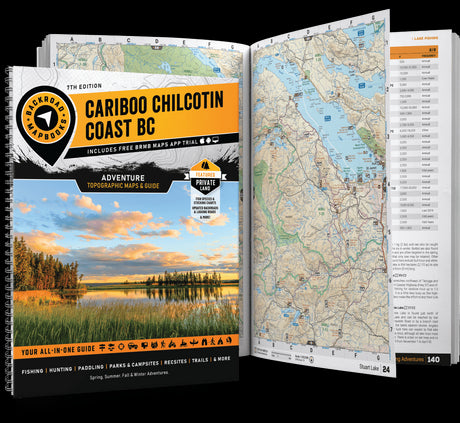
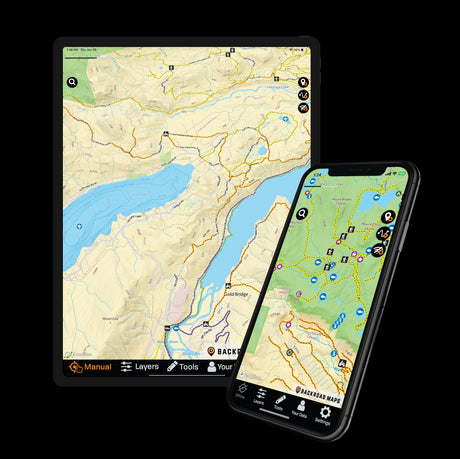
Some of these lakes sit at the end of rough forest-service roads, and a couple will test a low car after rain. Check the access before you tow a boat up one. On the BRMB Maps British Columbia layers, you can see the resource roads into each lake and judge whether you are driving in on smooth gravel or something sketchier. For on-the-water structure, the BC Fishing Mapbooks include lake-depth charts that show the shoals and drop-offs where trout actually hold. In summer, especially, knowing the depth contour is half the battle.

Licenses and limits
You need a valid BC freshwater fishing license, available online. Limits, bait bans, and gear rules vary lake to lake, and many of the best trout lakes have special regulations, single-barbless hooks, bait bans, or reduced limits to keep the fishing this good. Read the regs for the exact lake before you go, and follow them. The quality of these fisheries is not an accident.
Where to camp
Plenty of these lakes have provincial park or recreation-site camping right on the water, and there is free Crown land and rec-site camping all over the plateau. If you are making a weekend of it, our guide to free camping in BC covers how to find a legal site nearby and stay there for nothing.
Common mistakes to avoid
Fishing at the wrong depth in summer. When it is hot, the trout are below the thermocline or in the shallows at dawn and dusk. A depth chart and good timing beat a good fly.
Skipping the regs check. Limits and bait rules change from lake to lake. Read them before you cast.
Towing in blind. Some lake roads are rough. Check the access on a map before you commit the boat trailer.
Fishing chironomids too fast. The whole trick is painfully slow. If it feels like you are doing nothing, you are probably doing it right.
FAQ
What is the best fishing lake near Kamloops? For reliable, easy access, Lac le Jeune, Stake, and Roche. For bigger fish, Tunkwa and Pennask. Roche is the standout for fly anglers chasing size.
What fish are in the Kamloops lakes? Mostly stocked rainbow trout, in Pennask, Blackwater, and Fraser Valley strains, raised by the Freshwater Fisheries Society of BC.
What is the best way to catch trout near Kamloops? Chironomid fishing, with pupae patterns in sizes 12 to 16 fished slow under an indicator, is the signature local technique and produces from late spring into summer.
Do I need a license to fish near Kamloops? Yes, a valid BC freshwater fishing license. Check each lake's specific limits and bait rules, as many have special regulations.
When is the best time to fish? Just after ice-off in spring and again in the fall are the two prime windows. Early summer chironomid fishing is excellent. In midsummer heat, fish dawn, dusk, or deep.
Can I camp at these lakes? Yes. Several have provincial park or rec-site camping, and there is free Crown land and rec-site camping nearby.
Wrap up
You could fish a different Kamloops lake every weekend all summer and not run out. The anglers who consistently do well are not luckier. They plan two things: which lake is fishing well and how the fish are behaving that week. Then they get there and fish it according to the lake's schedule.
Scout lakes, depth charts, and forest-service road access on BRMB Maps, then download the maps for offline use (a PRO feature) so you stay oriented when you lose cell service. Start planning on the BRMB Maps British Columbia hub.