Crown land covers about 94% of British Columbia, and most of it is open for free camping. Here is how the rules work, the best regions to head to, how to confirm a spot is legal on iMapBC, and how to make sure you can actually drive in before you leave home.
Free camping in BC is one of the best deals in the country, if you know where to look. The province is roughly 94% Crown land, which means millions of hectares of forest, lakeshore, and backcountry are open to the public with no fee and no reservation (Province of B.C.).
The trick is not finding land. It is finding land you can actually get to, camp on legally, and reach with the vehicle you are driving.
Backroad Maps has charted this province for more than 30 years and is trusted by recreationists and search-and-rescue teams alike, so let us save you the guesswork. Here is how free camping works in BC, the two systems you will use to find it, the best regions to point the truck at, and the mistakes that get people fined or turned around.
British Columbia is about 94% Crown land, and most unreserved Crown land is open for free public camping. (Province of British Columbia)
Key takeaways
- About 94% of BC is Crown land, and most unreserved Crown land allows free camping for up to 14 consecutive days in one spot.
- Recreation Sites and Trails BC maintains more than 1,200 designated rec sites, some free, some with a small fee, with basic facilities like fire rings and pit toilets.
- No permit is needed for short-term dispersed camping on most Crown land, but tenures, leases, parks, and sensitive areas have their own rules.
- The Thompson-Okanagan, Cariboo, and Kootenays are the easiest regions for free camping. Crown land is scarce right around Vancouver and Victoria.
- Road access is the real filter. Many great-looking spots are reachable only by rough resource road.
- In the BRMB Maps app, the Private Land layer is your guide in BC: areas not marked as private are generally open. Confirm status on the BC Crown Land Registry, the ILRR, or iMapBC before you commit.
How free camping works in BC
 There are two ways to camp for free on public land in BC, and it helps to know which one you are using.
The first is dispersed camping on Crown land. On most unreserved Crown land, you can camp for free for up to 14 days in any one location, then you move on. No fee, no permit, no booking. This is the wild, no-facilities option, and it is what most people mean by free camping. You pack everything in, you pack everything out, and you leave the site the way you found it.
The second is a Recreation Site. Recreation Sites and Trails BC maintains more than 1,200 of these designated campsites across the province, often near a lake or river, usually with a fire ring and a pit toilet (Recreation Sites and Trails BC). Many are free, some charge a small nightly fee, and they are a great middle ground when you want a real spot without a campground price tag. Rec sites are also a safer bet for bigger rigs, since someone has already cleared and leveled the camping area.
The rules, in detail
Free camping is a camping right, not a property right, and the rules exist to keep it that way:
- 14-day stay limit. You can camp up to 14 consecutive days in one location on Crown land, then you must relocate. There are also rules about how far to move and how long to wait before returning to the same spot, so do not just shuffle a few metres and reset the clock.
- Fire bans are real and enforced. BC summers bring category bans fast. Check the current fire danger rating and any bans for your area before you light anything, including campfires and stoves during a total ban.
- Watch for tenures and leases. A lot of BC Crown land is under active forestry tenure, a range agreement, or a trapline. These can legally restrict access even though the land is technically Crown.
- Avoid sensitive areas. Camping too close to water, in riparian zones, or in protected habitat can get you fined. Keep a buffer from lakes and streams.
- Provincial parks are different. Parks have their own reservation systems and rules and are not general Crown land. Do not assume a park boundary works like open Crown land.
- Pack it in, pack it out. There is no garbage service on Crown land. Whatever you bring, you carry out.
How to confirm a spot is legal
This is the step most people skip, and it is the one that keeps you out of trouble. A patch of green on a satellite image tells you nothing about who owns it or whether you can camp there.
Camping is allowed when the land is provincially owned, is not part of a park or reserve, and is not licensed to someone else.
One important note on the app: the BRMB Maps app currently offers a Private Land layer in BC. As in other provinces, you can generally assume that areas not marked as private land are open for dispersed camping, unless otherwise restricted. So you plan around what is marked private on the BRMB Maps British Columbia layers, then head for the open ground. A dedicated Crown land layer for BC is on the way, but the Private Land layer gives you the same practical answer today.

For anyone who wants official confirmation, the BC Crown Land Registry and the Integrated Land and Resource Registry (ILRR) provide authoritative information on unreserved Crown land, and the province's iMapBC tool shows land status and tenures (Province of B.C.). Our overview of no-fee camping across BC walks through the same workflow.
Where to camp free, region by region
BC is huge, and free camping is far easier in some regions than others. Here is where to point the truck.

Thompson-Okanagan
This is prime, accessible free-camping country. The plateau above Kamloops and Merritt is dotted with small lakes, many with rec-site or dispersed camping right on the water, and the same lakes are excellent summer trout fishing. Easy road access off the forestry network makes it a great first trip.
Cariboo
The Cariboo, in the central interior, holds vast Crown land and classic lake camping. Spots like Horsefly Lake and Quesnel Lake anchor the region, with countless dispersed sites down the resource roads in between. This is big, quiet country where you can still find a lake to yourself.
Kootenays
The mountains of the Kootenays mix Crown land camping with the region's famous hot springs. The Slocan Valley is a hub, and rec sites like the one near Halfway Hot Springs put you within walking distance of a soak. Mountain weather changes fast here, so plan for it.
Vancouver Island
The Island has good free camping once you get away from the cities. Rec sites like Apple Point on Brewster Lake offer free sites with a boat launch and canoe access. Be aware that Crown land is scarce close to Victoria, and you will often need to head north or inland toward the central and north island to find it.
Sea-to-Sky and near Vancouver
Free Crown land camping is genuinely limited to Metro Vancouver. You usually have to get out past Chilliwack and into the Fraser Valley backcountry or up the Sea-to-Sky corridor before real options open up. Plan to drive.
Northern BC
The north has the most Crown land and the fewest people, which means endless dispersed camping along the highways and resource roads. The trade-off is distance, fuel, and self-reliance. This is where offline maps and a full jerry can matter most.
The part nobody warns you about: road access
Here is the single biggest reason a free camping trip goes sideways. The spot looks perfect on a satellite view, trees, a lake, no neighbors, and then the only way in is a washed-out resource road that your vehicle cannot handle.
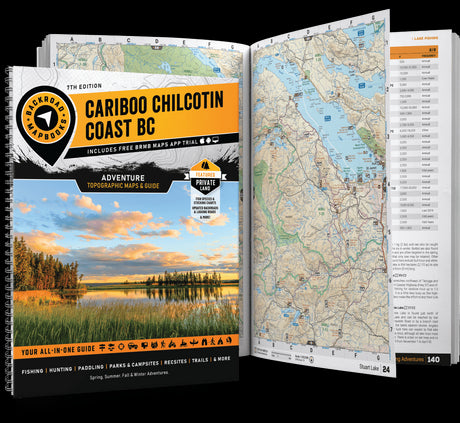
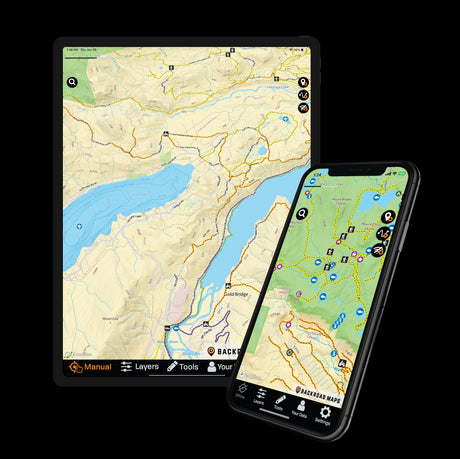
BC backcountry is laced with logging roads, resource roads, and deactivated routes that range from smooth gravel to impassable. Active logging roads can also have radio-call protocols and heavy truck traffic. Before you commit, check the road classification, not just the destination. On the BRMB Maps BC layers, you can see logging roads, resource roads, and rec sites separately, so you know whether you are towing a trailer in on a maintained road or crawling in on something an ATV would struggle with. The BC Backroad Mapbooks cover those access routes in the kind of detail that actually gets you there.
Gear and Leave No Trace
Free camping means no services, so you carry your own. The basics that make a Crown land trip work:
- Plenty of water, or a reliable filter, since you cannot count on a tap.
- A way to deal with human waste and a bag for all your garbage, because you are packing it out.
- A shovel, extra water, and a fire-safe setup, and the discipline to skip the fire entirely during a ban.
- Recovery gear and a full tank, since the nearest help can be hours away.
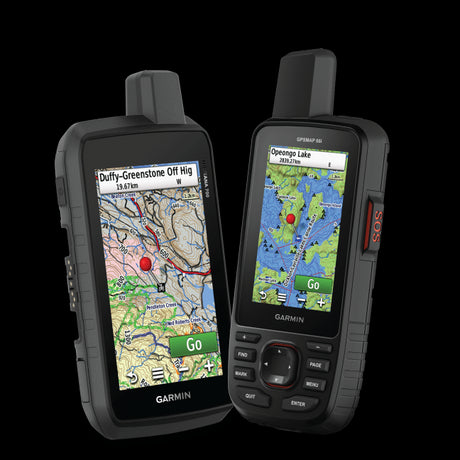
- A way to navigate without signal. Cell service disappears fast out here, so carry your backroads either on a Garmin GPS or downloaded for offline use in the BRMB Maps app. Both give you the detailed, routable roads you won't find on Google Maps. (Offline download is a PRO feature.)

Leave No Trace is not just etiquette out here, it is what keeps these areas open. Camp on durable ground, keep the site clean, respect wildlife, and pack out everything you bring in.
When to go
Summer is peak season, but it is also fire season. July and August bring the warmest weather and the highest fire risk, so bans are common and can shut down campfires province-wide. Late spring and early fall are quieter, cooler, and often have fewer restrictions, with the trade-off of less predictable weather. Whenever you go, check the current fire situation before you leave.
Common mistakes to avoid
Assuming all Crown land is open. Leased and licensed Crown land looks identical to unreserved land on a map. Check the status on iMapBC first.
Ignoring fire bans. They change fast in a BC summer and apply everywhere. Check before you go, every time.
Trusting a satellite view for access. A lake with no road in is a hike, not a campsite. Check the road layer.
Camping in a provincial park thinking it is Crown land. Parks have separate rules and usually need a booking.
Looking for free camping next to Vancouver or Victoria. It is scarce near the big cities. Plan to drive out to the interior or up-Island.
FAQ
Is free camping legal in BC? Yes. On most unreserved Crown land you can camp free for up to 14 consecutive days in one location, with no permit required.
Do I need a permit to camp on Crown land in BC? No permit is needed for short-term dispersed camping on most Crown land. Recreation Sites may charge a small fee, and provincial parks have their own booking systems.
How do I know if land is Crown land in BC? In BC, the BRMB Maps app shows a Private Land layer rather than Crown land, so you can generally assume areas not marked as private are open for dispersed camping, unless otherwise restricted. For official confirmation, use the BC Crown Land Registry, the Integrated Land and Resource Registry (ILRR), or the province's iMapBC.
How long can I stay in one spot? Up to 14 consecutive days in one location on Crown land, then you must move on, with rules about distance and waiting before you return.
Where is the best free camping in BC? The Thompson-Okanagan, the Cariboo, and the Kootenays are the most accessible regions. Northern BC has the most Crown land if you are willing to drive.
Can I have a campfire? Often, but only when there is no fire ban in effect. Always check the current BC fire danger rating before lighting a fire, and respect total bans.
Is there free camping near Vancouver? Very little right around the city. You generally need to get past Chilliwack into the Fraser Valley backcountry or up the Sea-to-Sky corridor.
Wrap up
BC gives you more free, wild places to camp than almost anywhere on earth. The campers who never get skunked are the ones who check three things before they leave: is this legal Crown land or a rec site, can my vehicle actually get there, and is there a fire ban in effect.
Scout the Private Land layer, rec sites, and the road network on BRMB Maps, then download it for offline use so you stay oriented where there is no signal. Start planning on the BRMB Maps British Columbia hub.